3D Barrier Bags, Inc

2026 Best Rotary Heat Sealer Machines for Global Buyers

Choosing among the 2026 Best Rotary Heat Sealer Machines for Global Buyers requires more than comparing speed and price. A reliable rotary heat sealer machine must create consistent seals across real packaging materials, changing film thicknesses, and demanding production schedules. Buyers should examine sealing temperature, pressure control, dwell time, roller alignment, cooling performance, and adjustment range.

Packaging researcher Dr. J. M. Miltz offers a useful principle: “Seal performance depends on heat, pressure, and dwell time working together.” This idea remains practical on the factory floor. A strong seal should look even, feel secure, and survive handling without unnecessary film distortion. Small details matter. Clean rollers matter. Stable tension matters.

This guide evaluates machines through an international purchasing lens. It considers output capacity, compatible films, energy use, operator access, maintenance requirements, automation options, and technical support. Global buyers also need clear documentation, spare-parts availability, electrical compatibility, and dependable commissioning assistance. A fast machine may still disappoint if its controls are confusing or its replacement parts arrive slowly.

No machine is perfect. That deserves honest attention. Product samples can look excellent during a short demonstration, yet performance may change after several hours of continuous operation. Buyers should request production trials using their actual film, package dimensions, and operating conditions. The best choice is not always the most powerful model. It is the machine that delivers repeatable seals, manageable ownership costs, and trustworthy support over time.

2026 Best Rotary Heat Sealer Machines for Global Buyers

Rotary Heat Sealer Fundamentals: Continuous Sealing at Up to 30 m/min

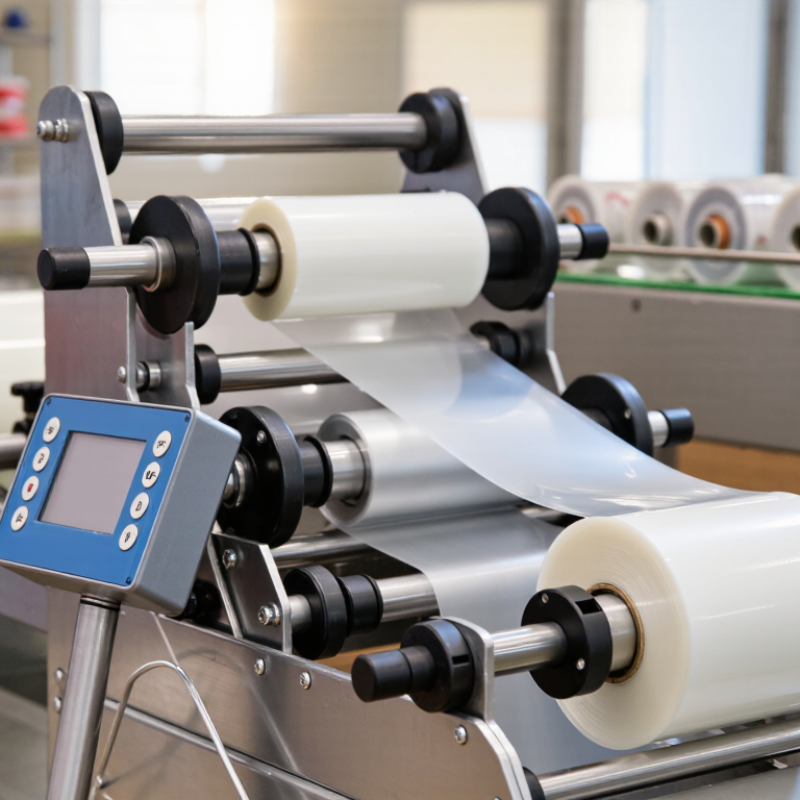
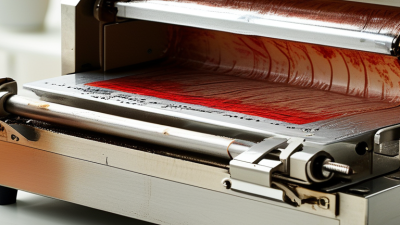
Rotary heat sealers create continuous seals as heated wheels press and bond thermoplastic packaging materials. Their rotary design supports steady production, with some systems reaching speeds of up to 30 m/min. Actual output depends on film structure, seal width, temperature, pressure, and operator setup.

The sealing process starts with controlled heat at the contact wheels. Pressure then closes small gaps between material layers. A cooling section helps the seal stabilize before the package leaves the machine.

Speed is not everything.

A fast line can produce weak seals when the film needs more heating time.

In practical trials, operators should test several speed and temperature combinations. Inspect the seal by checking its width, smoothness, and resistance to gentle pulling.

Watch the seal. Wrinkles near the wheel often indicate poor alignment or uneven tension.

My early assumption was that maximum speed meant better productivity. It did not. Material waste, stoppages, and retesting quickly reduced the real output.

Reliable buyers should request documented test results using their actual packaging film, not only sample material supplied by a machine seller.

Daily checks of wheel surfaces, pressure settings, and belt tracking also support consistent operation.

Key Specifications: 0.2–0.8 MPa Pressure and 3–12 mm Seal Widths

2026 Best Rotary Heat Sealer Machines for Global Buyers

Rotary heat sealers commonly specify 0.2–0.8 MPa pressure and 3–12 mm seal widths. These figures matter when packaging films vary in thickness, coating, and stiffness. A 3 mm seal can reduce material use, but it leaves less tolerance for wrinkles or contamination. Wider 8–12 mm seals provide a larger bonding area for heavier pouches. They may also increase heat demand and material consumption.

The Flexible Packaging Association reported approximately $40.8 billion in U.S. flexible packaging sales in 2023. This scale highlights the need for repeatable sealing, not just fast output. PMMI industry research also identifies labor efficiency and packaging quality as continuing equipment priorities. Buyers should test pressure across the full range, especially near 0.2 MPa. Excessive force can distort soft films, while insufficient force creates channels that appear sealed but leak later. Small details matter. Check seal bars under working temperature. Inspect pouch corners by hand.

For global purchasing, request seal-strength data using methods such as ASTM F88. ISO 11607 is also relevant for sterile barrier packaging validation. A machine rated at 0.8 MPa is not automatically better. Real performance depends on temperature control, dwell time, film structure, and alignment. I would avoid selecting equipment from specifications alone. That approach is convenient, but incomplete. Trial samples should include dusty surfaces, uneven loading, and repeated start-stop cycles. Some results may disappoint. That is useful evidence, not failure.

2026 Best Rotary Heat Sealer Machines for Global Buyers

Reference comparison of common rotary heat-sealing configurations across the 0.2–0.8 MPa pressure range and 3–12 mm seal-width range.

Material Compatibility: PE, PP, Laminates, Foils, and ASTM F2029 Testing

2026 Best Rotary Heat Sealer Machines for Global Buyers

Material compatibility should guide every rotary heat sealer purchase. Polyethylene seals at lower temperatures than polypropylene, so one fixed setting can create weak or distorted closures. PE films often need controlled pressure and moderate heat. PP usually demands a narrower temperature window. Laminates add complexity because adhesive layers, coatings, and barrier films respond differently. Foil structures transfer heat quickly, yet they may hide channel leaks beneath a smooth surface.

The Flexible Packaging Association reported approximately $42.9 billion in U.S. flexible packaging sales for 2023. That scale reflects growing demand for reliable multilayer packaging. However, market size does not guarantee process stability. Operators should record temperature, dwell time, pressure, line speed, and film thickness during trials. Small changes matter. Very small changes.

ASTM F2029-16(2023) provides a recognized procedure for producing heat seals and measuring seal strength. Use it to compare PE, PP, laminates, and foil-based structures under controlled conditions. A practical validation plan should include seal-strength testing, visual inspection, and leak evaluation after production. ASTM results can expose a seal that looks perfect but fails under tension. I have seen clean edges mislead inexperienced operators. The mistake is understandable, but repeatability matters more than appearance. Rotary machines should offer stable jaw alignment, adjustable dwell control, and documented temperature feedback. Even then, material suppliers’ specifications deserve careful review. Film names alone are not enough.

2026 Best Rotary Heat Sealer Machines for Global Buyers - Material Compatibility: PE, PP, Laminates, Foils, and ASTM F2029 Testing

Recommended Machine Category Best Application Typical Seal Configuration Typical Temperature Range Typical Operating Speed Typical Seal Width Suitable Materials Material Limitations ASTM F2029 Suitability Global Buyer Evaluation
Compact Rotary Band Sealer Low- to medium-volume pouch, liner, and bag sealing Continuous heated band; horizontal product path 80–220 °C 5–15 m/min 6–12 mm PE PP PE laminates PP laminates Bare foil is generally unsuitable. Thick or highly filled films may require slower speed and higher heat. Useful for production sealing, but not a complete ASTM F2029 test system without controlled test fixtures and documented settings. Best for flexible-film entry applications
Heavy-Duty Rotary Band Sealer Long production runs and filled bags requiring stronger sealing performance Continuous heated band with pressure rollers and adjustable conveyor 80–250 °C 8–25 m/min 8–15 mm PE PP PE/PA laminates PET/PE laminates Seal strength depends on the heat-seal layer. Abrasive powders, contamination, and heavy headspace can reduce seal quality. Appropriate for producing test specimens when temperature, line speed, pressure, and material orientation are recorded consistently. Best for high-throughput general packaging
Vertical Rotary Band Sealer Powders, liquids, granules, and products that should remain below the seal zone Continuous heated band; vertical product path 80–220 °C 5–20 m/min 6–15 mm PE PP Laminated pouches Heat-sealable foil laminates Product leakage or contamination in the seal area may require cleaning systems, wider seals, or pre-cleaning. Suitable for production trials, but ASTM F2029 laboratory comparisons should use a controlled and repeatable specimen preparation method. Best for liquid and granular products
Constant-Heat Rotary Sealer Films with a relatively broad heat-sealing window and stable continuous operation Heated rotary wheel or band with fixed temperature control 100–260 °C 3–15 m/min 3–10 mm PE PP Paper/PE laminates PET/PE laminates Less suitable for materials requiring separate dwell-time control or a narrow sealing temperature window. Can support repeatable screening, but it does not independently establish heat-seal initiation temperature or seal strength. Best for stable, repeatable production sealing
Impulse-Controlled Rotary Sealer Heat-sensitive structures and materials requiring limited heat exposure Rotary sealing element with pulsed electrical heating and pressure control 100–300 °C setpoint range; actual film interface temperature varies 2–12 m/min 3–12 mm Thin PE Thin PP Multilayer laminates Calibration is important because heating and cooling response can vary with film thickness, speed, and pressure. Potentially useful for comparative studies when the heat pulse, pressure, speed, and cooling conditions are documented. Best for heat-sensitive multilayer films
Aluminum-Foil Laminate Rotary Sealer Barrier packaging for light, oxygen, moisture, and aroma-sensitive products Heated rotary band or wheel sealing the thermoplastic inner layer 120–280 °C 3–15 m/min 6–15 mm Al/PE laminates Al/PP laminates PET/Al/PE Paper/Al/PE Bare aluminum foil is not normally heat-sealed without a compatible polymer coating or sealant layer. Suitable for preparing foil-laminate specimens if the polymer sealant layer, orientation, and test conditioning are controlled. Best for high-barrier foil laminate packaging
Servo-Assisted Rotary Sealer High-speed lines requiring accurate speed, pressure, and seal registration Servo-driven rotary jaws, wheels, or bands with programmable controls 80–300 °C, depending on sealing element and film structure 10–40 m/min 5–20 mm PE PP Laminates Foil laminates Higher purchase and maintenance requirements; the machine must be matched to film thickness and sealant chemistry. Strong option for repeatable specimen production, provided operating parameters are measured and documented rather than inferred from controller settings. Best for automated export-scale production
Laboratory Rotary Heat-Seal Fixture Material screening, process development, and comparative sealability studies Small rotary or heated-jaw fixture with controlled pressure and dwell conditions Ambient to approximately 300 °C Controlled laboratory speed or indexed motion Typically 5–25 mm PE PP Laminates Coated foils Not intended for commercial filling and packaging throughput. Results may not represent a full production line. Most appropriate category for ASTM F2029-oriented work when it provides controlled temperature, pressure, dwell time, specimen preparation, and traceable measurement. Best for laboratory development and quality control

Material compatibility: PE and PP films generally require sealing conditions matched to resin type, film thickness, additives, and sealant-layer formulation. Laminates and foil structures seal through their thermoplastic inner layer; bare aluminum foil is not normally heat-sealable by itself.

ASTM F2029 context: ASTM F2029 describes a practice for making heatseals in flexible barrier materials so their heatsealability can be evaluated. It does not certify a particular rotary machine, and production-machine settings should not be treated as ASTM test results without controlled specimen preparation and documented test conditions.

Buyer checklist: Confirm electrical standard, available voltage and frequency, temperature-control accuracy, conveyor load, seal-pressure adjustment, spare heating elements, guarding requirements, language options, documentation, and local service capability before purchase.

Seal Integrity Standards: ASTM F88 Strength Tests and ISO 11607 Validation

For global buyers, a rotary heat sealer is not merely a faster closing machine. It is a controlled process for maintaining package integrity. ASTM F88/F88M measures seal strength through a peel test, commonly reported in newtons per 15 millimeters. The result shows how much force separates the seal, but it does not prove sterility or leak resistance. That distinction is often missed.

ISO 11607-1:2019 evaluates the sterile barrier system, while ISO 11607-2:2019 focuses on forming, sealing, and assembly process validation. A practical qualification plan should record jaw temperature, dwell time, pressure, line speed, and material lot. Operators should also inspect seal width and wrinkles under consistent lighting. Small variations matter. A 2°C drift may look harmless, yet it can change peel behavior across multilayer films.

Industry research supports this stricter approach. Smithers’ 2024 medical packaging report identifies stronger regulatory control and automated inspection as major market drivers. PMMI’s packaging machinery research also highlights labor efficiency and quality assurance as key investment factors. These reports indicate a clear direction, though market forecasts are not validation evidence. Buyers should request installation qualification, operational qualification, and performance qualification records. They should review aging and distribution testing, not only factory samples. I have seen attractive seals fail after rough handling. Equipment selection still requires skepticism.

Global Buyer Checklist: Voltage, CE/UL Compliance, Throughput, and Total Cost

Buying a rotary heat sealer in 2026 starts with the power socket, not the machine brochure.

Confirm local voltage, frequency, phase, plug type, and permitted tolerance. A 220–240 V unit may not suit a 208 V factory line without engineering review. Ask for wiring diagrams and measured startup current. Small detail, large consequence. CE or UL markings should match the machine’s actual model and electrical configuration. Request current declarations, test reports, and an accessible technical file. Do not accept a logo alone. Certification scope can be misunderstood.

Throughput needs a real production test. Record bag width, film thickness, seal temperature, conveyor speed, and cooling time. Compare usable packages per minute, not the advertised maximum. A line sealing 40 small pouches may handle only 18 larger packs. Leave room for pauses, film changes, inspection, and operator movement. Too much speed can create weak seals. It did in one trial. That result changed the purchase calculation.

Calculate total cost over several years. Include machine price, freight, duties, installation, spare heaters, belts, sensors, energy, training, and service travel. Ask how quickly replacement parts arrive. A cheap unit becomes expensive during a three-day stoppage. Review warranty exclusions carefully. Check whether local technicians can diagnose temperature drift and belt wear. Keep sample seals from acceptance testing. They provide useful evidence later. My own checklist still misses surprises, especially unstable power and changing film suppliers. Build a contingency allowance, then challenge every assumption before ordering.