3D Barrier Bags, Inc

7 Best Hot Sealer Machines for Global Buyers?

Choosing the right hot sealer machine can determine whether packaged goods arrive secure, clean, and ready for sale. Global buyers must assess more than sealing speed. Film thickness, bag material, seal width, temperature control, and operating voltage all influence daily performance.

Packaging expert Gordon L. Robertson wrote, “Packaging is the art, science and technology of enclosing and protecting products for distribution, storage, sale and use.” This principle remains practical on a busy production floor. A reliable sealer should create an even seam without scorching thin polyethylene or leaving weak corners. It should also match local power requirements and available maintenance support.

This guide examines seven leading hot sealer machine options for international purchasing decisions. The comparison considers sealing strength, adjustable heat settings, conveyor compatibility, portability, safety features, and replacement-part access. User feedback and manufacturer specifications provide useful evidence, but neither source is flawless. Some advertised capacities may depend on ideal materials, skilled operators, or short production cycles.

Real conditions are less predictable.

A machine tested with dry, uniform bags may struggle in humid warehouses. A low-cost model may appear attractive until heating elements become difficult to replace. Buyers should inspect sample seals, review warranty terms, and request technical documentation before ordering. The seven selections below are not universal answers. They are practical starting points for comparing performance, operating costs, and long-term reliability across different packaging environments.

7 Best Hot Sealer Machines for Global Buyers?

What Is a Hot Sealer Machine and How Does It Work?

What Is a Hot Sealer Machine and How Does It Work?

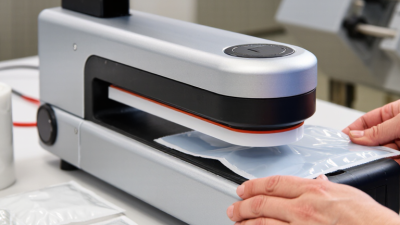
A hot sealer machine closes thermoplastic packaging by applying controlled heat and pressure. It softens the inner plastic layers, then bonds them as the seal cools. Most machines use heated sealing bars, adjustable temperature controls, and a timed sealing cycle. Some models create an impulse seal, heating only during contact. Others provide constant heat for thicker films and coated materials.

In practical use, operators place the open bag between the sealing jaws. The machine heats the film, applies pressure, and releases it after a short dwell time. A strong seal depends on film type, thickness, temperature, pressure, and timing. The first setting is rarely perfect. Wrinkles can cause leaks, while excessive heat may burn or weaken the package. Buyers should test real packaging samples before choosing equipment for production.

Tips: Keep the sealing surface clean and dry. Start with a moderate temperature, then adjust gradually. Check seal width and strength by hand after cooling. Leave enough space above the product to prevent contamination near the seal. For global purchasing, confirm voltage, plug type, spare-part availability, operating instructions, and applicable electrical safety requirements. A machine that looks powerful may still perform poorly with unsuitable film. Practical testing matters more than attractive specifications.

7 Best Hot Sealer Machines for Global Buyers? - What Is a Hot Sealer Machine and How Does It Work?

A hot sealer machine uses controlled heat and pressure to soften or melt compatible thermoplastic layers, creating a continuous airtight or moisture-resistant seal. The best machine depends on the package material, sealing length, production speed, product orientation, and available power supply.

Rank Machine Type Recommended Use Typical Sealing Width or Diameter Typical Speed or Output Common Compatible Materials Typical Power Range How It Works Main Buying Advantage
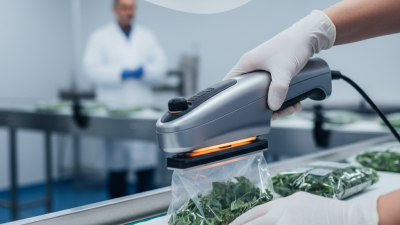
1 Handheld Impulse Sealer Small workshops, retail packing, laboratory samples, and low-volume e-commerce orders 200–400 mm sealing length; approximately 2–5 mm seal width About 10–25 bags per minute, depending on operator handling PE, PP, laminated plastic films, and other heat-sealable pouches Approximately 300–800 W An electrically heated bar activates only during the sealing cycle. The operator places the bag between the bars, applies pressure, and releases it after the set dwell time. Low purchase cost, compact footprint, simple operation, and easy voltage adaptation for many markets
2 Foot-Operated Impulse Sealer Medium-volume bag sealing where both hands are needed to position large or heavy products 400–800 mm sealing length; approximately 3–8 mm seal width About 15–35 bags per minute PE bags, PP bags, laminated films, and heat-sealable woven or coated packaging Approximately 0.8–1.5 kW A foot pedal closes the heated sealing jaws, leaving the operator's hands free to hold and align the package. Better ergonomics and higher productivity than a handheld unit, without requiring compressed air
3 Continuous Band Sealer Frequent sealing of powders, grains, snacks, chemicals, and general retail products Typically 6–15 mm continuous seal width Approximately 5–20 m/min conveyor or bag-feed speed; around 20–60 bags per minute PE, PP, laminated films, and heat-sealable multilayer pouches Approximately 0.3–1.0 kW Heated belts or sealing blocks continuously apply heat and pressure while the bag moves through the machine. A cooling section stabilizes the seal. Consistent seals, high repeatability, and less operator fatigue for regular production
4 Vertical Continuous Band Sealer Liquid, granular, or powder products that should remain upright during sealing Typically 6–15 mm continuous seal width; adjustable bag-height handling Approximately 5–15 m/min; commonly 20–50 bags per minute PE, PP, laminated films, and selected coated packaging materials Approximately 0.5–1.2 kW The bag travels vertically through heated and pressure-controlled sealing belts, helping reduce product contact with the seal area. Suitable for spill-prone products and available with optional gas flushing, printing, or conveyors
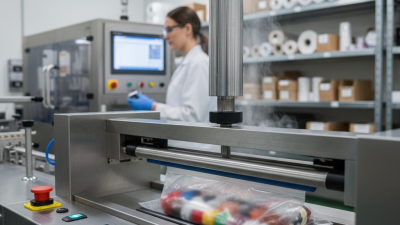
5 Chamber Vacuum Sealer Meat, seafood, cheese, prepared food, medical products, and products requiring reduced oxygen exposure Common chamber bar lengths of 300–500 mm; approximately 3–8 mm seal width About 2–8 cycles per minute, depending on chamber size and vacuum level Vacuum pouches made from PE/PA multilayer films and other vacuum-compatible laminates Approximately 1–3 kW The pouch is placed inside a chamber. Air is removed, the heated bar seals the pouch, and the chamber returns to atmospheric pressure before opening. Reliable vacuum control, strong seals, and good performance with products that contain air or liquid
6 Tray and Lidding Heat Sealer Ready meals, fresh food, produce, bakery items, and portion-controlled food trays Common sealing areas of approximately 150–400 mm; seal widths typically 2–5 mm Approximately 4–12 trays per minute, depending on tooling and sealing time PP, PET, CPET, PE-coated paperboard, and compatible lidding films matched to the tray material Approximately 1–3 kW A heated die presses lidding film against the tray flange for a preset time and temperature. Some systems also provide vacuum or modified-atmosphere packaging. Professional presentation, repeatable tray seals, and compatibility with retail-ready food packaging
7 Induction Cap Sealer Bottles and containers for beverages, cosmetics, pharmaceuticals, chemicals, and nutraceuticals Common cap diameters of approximately 20–120 mm Approximately 20–60 bottles per minute, depending on cap size, line speed, and container handling Containers with compatible induction liners, including many PE, PP, PET, and glass systems Approximately 0.5–2.0 kW An electromagnetic field heats the foil layer inside the liner without direct contact. The heated polymer coating bonds the liner to the container lip. Contact-free tamper evidence, leak resistance, and easy integration into automatic filling lines
Buying note: Actual performance varies with film structure, package dimensions, seal contamination, temperature settings, dwell time, cooling time, operator skill, and regional voltage requirements. Buyers should request material compatibility tests, seal-strength samples, electrical specifications, spare-part availability, and applicable safety documentation before purchase.

Main Types of Hot Sealer Machines for Global Buyers

Hot sealer machines differ by heating method, material compatibility, and production speed. Impulse sealers heat only when the jaws close, making them suitable for polyethylene and laminated pouches. They use short sealing cycles and consume little power. However, inconsistent pressure can create weak corners. Operators must keep the sealing surface clean.

Constant-heat sealers maintain heated jaws during operation. They work well with coated films, cellophane, and thicker laminates that need steady heat. Temperature, pressure, and dwell time must match the film structure. Small changes matter. A burnt edge often means excessive heat, not poor film quality. This type suits workshops with repeated manual packing.

Continuous band sealers move bags through heated belts, supporting faster output and more uniform seals. Vertical models handle liquids or granular goods more safely, while horizontal models suit lighter products. Vacuum chamber sealers remove air before heat sealing and are useful for products needing reduced oxygen exposure. Global buyers should check voltage, frequency, plug standards, seal width, spare heating elements, and operating manuals. Food-contact packaging may also require documented material compliance in the target market. A machine can appear powerful yet perform poorly with local films. Trial sealing with real bags is wiser than relying on catalog figures. Even experienced buyers sometimes overlook operator training and replacement-part availability.

Seven Leading Hot Sealer Machines Compared by Key Features

Seven Leading Hot Sealer Machines Compared by Key Features

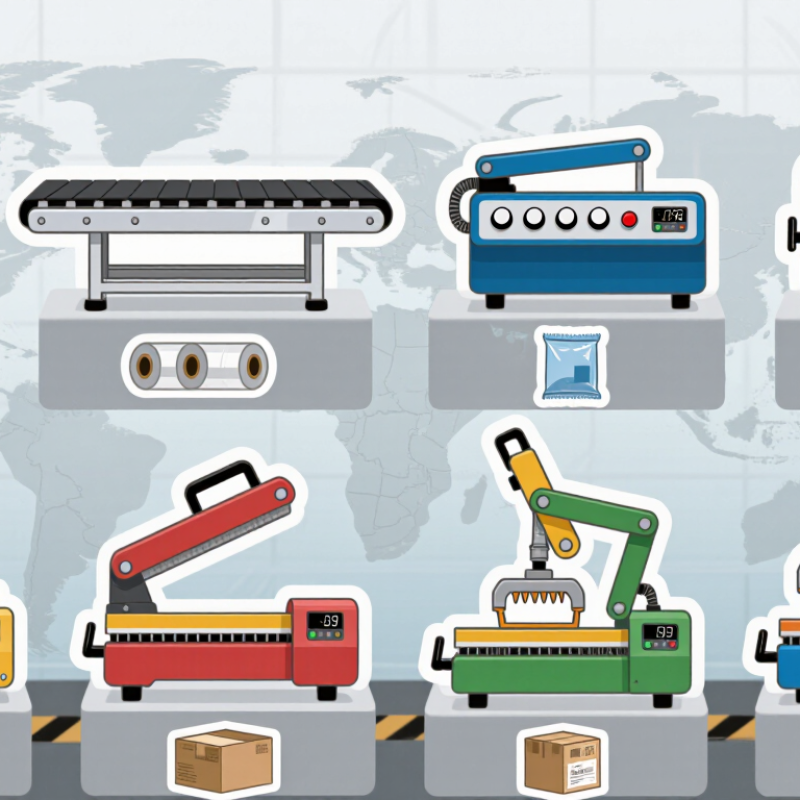
Global buyers need more than a heated jaw and a fast cycle. A continuous band sealer suits high-volume pouches, offering steady speed and adjustable temperature. A vertical band sealer handles liquid or powder-filled bags with less product movement. A horizontal model works well with dry goods and lightweight packaging. An impulse sealer remains compact, affordable, and practical for lower daily output. Its heating wire needs regular inspection. Small flaws can spread quickly.

A vacuum hot sealer removes air before closing the package, helping reduce excess space and improve presentation. A pneumatic hot sealer provides stronger, more consistent pressure for thicker laminated films. A coding-integrated sealer adds batch or date information during closure, reducing separate handling. Compare sealing width, temperature stability, conveyor capacity, air requirements, and spare-part access. Film compatibility matters too. A perfect seal on clean film can mislead. During factory trials, test dusty surfaces, uneven filling, and repeated cycles. My early evaluations focused too heavily on speed. Later, seal strength and operator training proved more important. Ask suppliers for sample testing, maintenance guidance, electrical specifications, and documented quality checks. Reliable equipment should perform consistently, not only during a short demonstration.

7 Best Hot Sealer Machines for Global Buyers

Seven leading hot sealer machine categories compared by typical sealing speed and maximum seal width.

The comparison uses representative market specification ranges for common hot sealer machine types. Continuous band sealers generally provide higher throughput, while impulse and handheld models are better suited to low-volume, portable, or irregular packaging applications. Actual performance varies with film material, pouch thickness, product type, and operator settings.

How to Match a Sealer With Materials and Production Needs

Choosing among the 7 best hot sealer machines starts with the packaging material, not the machine price.

Polyethylene and polypropylene films often need different temperature, pressure, and dwell-time settings.

Laminated foil pouches may require stronger jaws and longer heat exposure.

Coated paper can scorch if operators copy plastic-film settings.

Material trials matter.

Mordor Intelligence estimates the flexible packaging market will exceed USD 350 billion by 2029. That growth increases pressure for reliable seals and repeatable production.

For low-volume work, an impulse sealer may provide practical control and low energy use.

Continuous band sealers suit higher output and longer shifts.

Hot-bar systems can deliver wider, more consistent seals, but they usually need better maintenance and trained operators.

Measure pouch width, film thickness, hourly volume, and acceptable seal strength before selecting equipment. ASTM F88 seal-strength testing can help verify results, while ASTM F2029 supports heat-sealing process evaluation. These standards do not replace real production trials.

A small machine may seal perfectly at 20 bags per minute, then struggle at 80. That gap is easy to miss.

PMMI industry research continues to identify labor availability and automation as important packaging concerns, so simple controls and fast changeovers deserve attention. Still, automation is not always the answer. I have seen oversized equipment waste floor space and complicate cleaning.

Request samples, test the actual material, and record temperature, pressure, dwell time, and seal strength before purchase.

Global Buying Factors: Safety, Compliance, Support, and Cost

7 Best Hot Sealer Machines for Global Buyers

Choosing among the seven best hot sealer machines requires more than comparing heating power. A suitable machine should match film thickness, pouch size, production speed, and operator skill. Impulse sealers suit small batches, while continuous band models support steady export production. Vacuum and chamber units help reduce air exposure in selected packaging applications.

Safety must be checked before price. Look for guarded heating areas, stable temperature controls, emergency stops, and clear operating instructions. Electrical documentation should fit the destination market. Materials touching packaging should also be verified for the intended use. Compliance paperwork is valuable, but it can become outdated. Ask for current test reports, manuals, and traceable component details.

Support often decides whether a machine earns its cost. Confirm spare-part availability, remote troubleshooting, training, and response times across time zones. Calculate energy use, seal replacement, maintenance, shipping, and installation expenses. The cheapest quotation may hide costly downtime. I would also test sample packaging before ordering. A seal that looks strong can fail after cooling, stacking, or transport vibration. Small errors matter. Real factory conditions are rarely as clean as a supplier’s demonstration.