| Material Origin | Quartzite is a natural metamorphic rock formed when quartz-rich sandstone is exposed to heat and pressure. | It provides a genuine natural-stone surface with distinctive mineral movement and pattern variation. | Review the exact slab rather than relying only on a small sample, because color, veining, and texture can vary from slab to slab. |
| Hardness | Pure quartz has a Mohs hardness of 7, and many true quartzites are highly resistant to scratching. | It is generally suitable for heavily used kitchen countertops, vanities, wall cladding, and other demanding applications. | Confirm that the selected material is genuine quartzite. Some stones sold under similar names may have different performance characteristics. |
| Heat Resistance | Natural quartzite generally tolerates brief contact with hot cookware better than many engineered surfaces, although thermal shock can still cause damage. | It can be a practical option for kitchen areas where heat exposure is possible. | Use trivets or heat pads, especially with very hot pans, and follow the fabricator’s installation and care recommendations. |
| Porosity and Staining | Quartzite is not completely nonporous. Porosity varies by stone, finish, and geological composition. | A properly selected and maintained surface can provide dependable everyday performance. | Ask about absorption testing and stain resistance. Test or approve the sealer before installation when required. |
| Sealing Requirements | Many quartzite surfaces benefit from a penetrating sealer, but sealing frequency depends on porosity, use, and product instructions. | Sealing can reduce the risk of liquid penetration and simplify routine maintenance. | Obtain a written maintenance schedule and verify whether the fabricator or sealer manufacturer recommends periodic resealing. |
| Scratch and Abrasion Resistance | True quartzite is usually more scratch-resistant than marble, but abrasive particles and improper tools can still mark the surface. | It is well suited to areas exposed to frequent handling and daily activity. | Use cutting boards and avoid dragging gritty objects across the surface. Do not assume scratch resistance means scratch-proof performance. |
| Acid and Chemical Sensitivity | Quartzite can be affected by strong acids, harsh chemicals, or abrasive cleaners; surface finishes may also be dulled by improper products. | Routine cleaning is straightforward when neutral, stone-safe products are used. | Avoid acids, scouring powders, bleach-heavy products, and unknown cleaners. Follow the stone-care instructions supplied for the slab. |
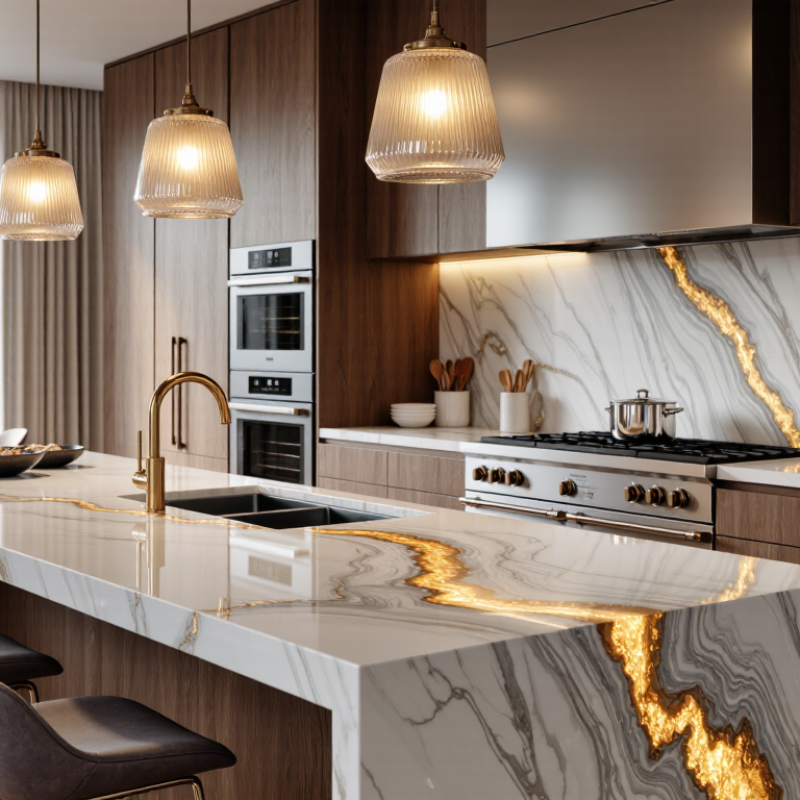
| Appearance and Design | Available appearances range from white and gray to beige, green, pink, and other mineral-influenced tones, with patterns that may resemble marble. | It can deliver a natural focal point while supporting traditional, contemporary, and transitional designs. | Plan slab layout carefully to control vein direction, seams, bookmatching, edge details, and color continuity. |
| Fabrication and Installation | Quartzite is dense and hard, which can make cutting, polishing, drilling, and edge profiling more demanding than working with softer stones. | Professional fabrication can produce durable edges, accurate cutouts, and a refined finished appearance. | Use an experienced natural-stone fabricator. Confirm support requirements, seam locations, sink cutouts, and access conditions before ordering. |
| Maintenance Level | Routine care usually involves wiping spills promptly with a soft cloth and cleaning with a pH-neutral stone cleaner. | Daily upkeep is relatively simple compared with materials that require frequent polishing or specialized treatment. | Choose quartzite only if you are comfortable with periodic sealing and natural variation in the surface. |
| Longevity | When correctly fabricated, installed, and maintained, quartzite can provide long service life in residential and commercial interiors. | Its durability can support long-term countertop, flooring, wall, and vanity applications. | Evaluate the entire system—not just the stone—including cabinet support, installation quality, seam design, cleaning practices, and exposure conditions. |
| Cost Planning | Pricing varies substantially according to rarity, thickness, finish, slab size, fabrication complexity, transportation, and installation. | Comparing complete installed quotations helps reveal the actual project budget. | Request an itemized quote covering slabs, templates, fabrication, edge profiles, cutouts, delivery, installation, sealing, and potential waste. |
| Best-Fit Applications | Common uses include kitchen worktops, bathroom vanities, fireplace surrounds, backsplashes, feature walls, and selected flooring applications. | Its combination of hardness, natural appearance, and heat tolerance makes it versatile for many interior projects. | Check the stone’s technical data for the intended use, particularly for floors, wet areas, exterior locations, and high-traffic installations. |
| Sustainability Considerations | Quartzite is a natural material, but quarrying, processing, transport, and replacement waste all affect its environmental impact. | A long service life can reduce the need for frequent replacement. | Ask about local availability, responsible sourcing information, recycled content in ancillary materials, and options for minimizing fabrication waste. |