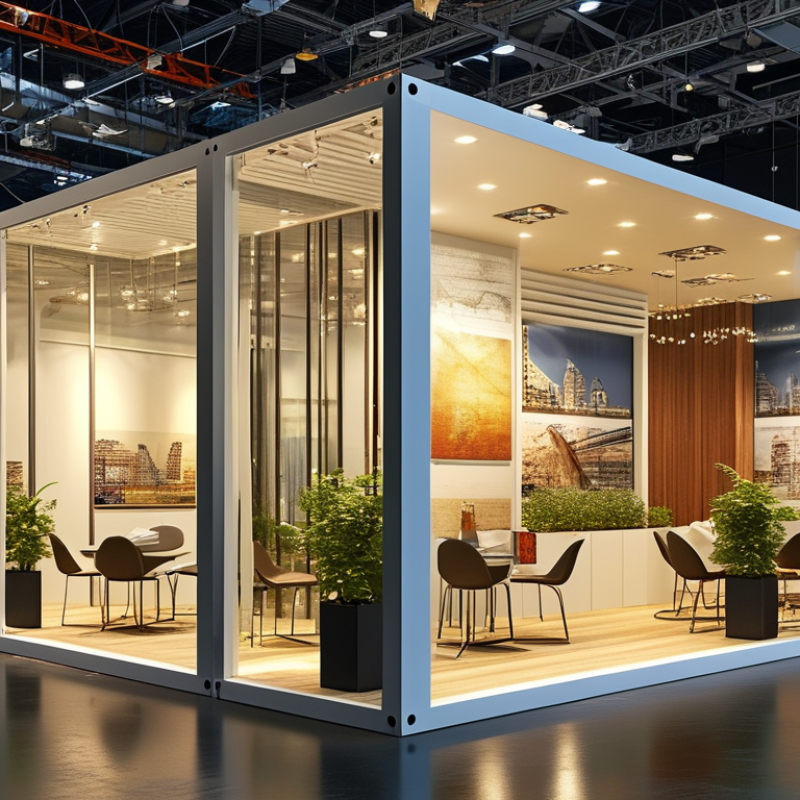
| Reusability | Frames, graphics, lighting and counters can usually be reconfigured for different booth sizes and layouts. | One booth system can support multiple events instead of requiring a completely new structure for every exhibition. | Ask for available layouts, replacement-part availability and compatibility between existing components. | Excellent |
| Transport and Storage | Many systems pack into reusable cases or crates, with transport volume depending on frame type, graphics and furniture. | Compact packing can simplify international freight planning and reduce storage requirements between events. | Confirm packed dimensions, gross weight, case quantity, handling requirements and local freight restrictions. | Very Good |
| Installation Time | A standard modular structure may be assembled by a trained team within several hours, depending on size and complexity. | Faster installation can reduce on-site labor time and leave more time for graphics, product placement and testing. | Request an assembly guide, tool list, crew-size recommendation and realistic setup schedule. | Very Good |
| Booth Size Flexibility | Modular components can be arranged for linear, corner, peninsula or island configurations when the system supports those formats. | Flexible configurations help adapt the exhibit to different venue footprints and regional floor-plan standards. | Check supported dimensions, maximum structural spans, hanging-sign rules and venue-specific height limits. | Excellent |
| Branding Updates | Printed fabric, rigid panels, lightboxes and digital displays can be replaced or updated without replacing every structural component. | Localized messaging, languages, campaigns and product information can be changed for each market. | Confirm graphic dimensions, print specifications, color-management process and replacement lead times. | Excellent |
| International Compliance | The booth itself must comply with venue, fire-safety, electrical, accessibility and structural requirements in each location. | Rules differ by country, venue and event organizer; non-compliance can cause delays, modifications or refused installation. | Obtain material certificates, flame-retardancy documentation, electrical specifications and engineering drawings where required. | Requires Review |
| Local Installation Support | Some suppliers provide regional partners or on-site crews; others require the exhibitor to coordinate installation independently. | Local support can reduce language barriers, scheduling risks and the need to transport a full installation team. | Verify service coverage, response times, labor rates, overtime rules and responsibility for venue coordination. | Depends on Supplier |
| Technology Integration | Modular designs can accommodate monitors, LED displays, lighting, charging points and product demonstration areas. | Integrated technology can support presentations, lead capture and interactive demonstrations across different markets. | Check load capacity, cable management, power requirements, internet access and regional plug standards. | Very Good |
| Long-Term Cost Control | The initial purchase can be higher than a basic single-use display, while repeated use and replaceable graphics may improve value over time. | A multi-event system can spread structural costs across exhibitions and reduce repeated design and fabrication work. | Compare purchase, storage, freight, labor, refurbishment, graphics and disposal costs over the planned event schedule. | Strong for Repeated Use |
| Sustainability | Reusable frames and replaceable graphics can reduce the need for complete booth disposal after every event, although materials and logistics still affect impact. | Reuse may support sustainability targets when the booth is used repeatedly and shipped efficiently. | Ask about recycled content, repairability, graphic recycling options, packaging materials and expected service life. | Good with Proper Planning |