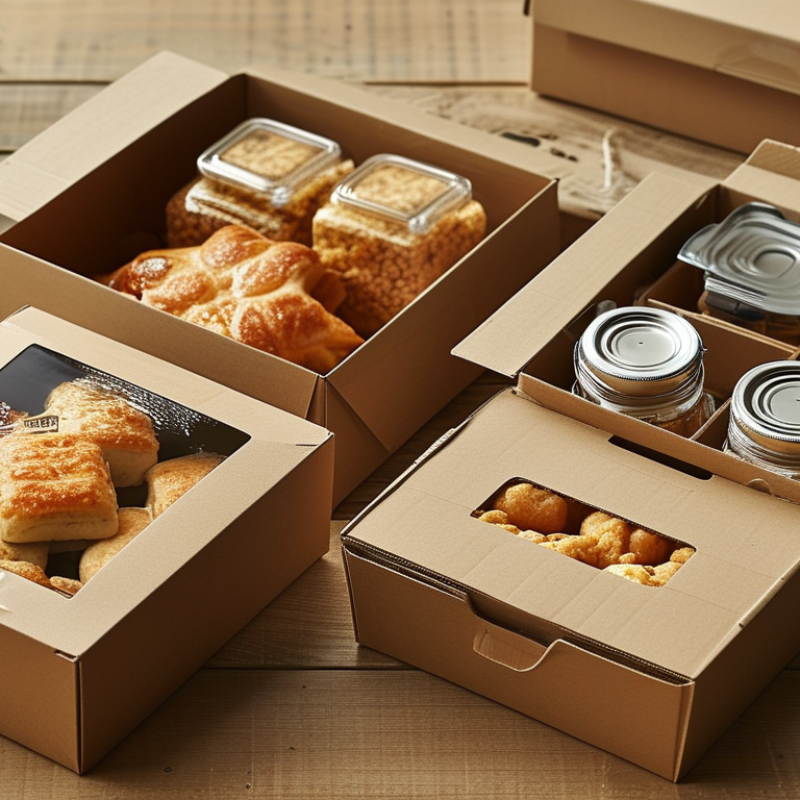
| Folding Carton | Paperboard, commonly made from virgin or recycled fiber | Lightweight, printable, flat-packed, and easy to die-cut into different shapes | Cereal, pasta, tea, frozen foods, bakery products, and dry snacks | Basic paperboard has limited resistance; coatings or inner bags may be needed for wet or oily foods | Generally recyclable when clean and free from extensive plastic or foil coatings |
| Corrugated Shipping Box | Linerboard with a fluted paperboard layer between outer sheets | High stacking strength, cushioning, protection during transport, and multiple flute profiles | Meal-kit deliveries, produce, beverage multipacks, bulk food, and e-commerce shipments | Standard grades are not waterproof; waxed or coated grades provide greater resistance but may affect recycling | Widely recyclable when dry, clean, and separated from non-paper components |
| Paperboard Takeout Box | Food-grade paperboard, often with a grease-resistant treatment | Pre-glued or self-locking construction, convenient carrying shape, and optional ventilation features | Fried foods, noodles, rice dishes, sandwiches, bakery items, and takeaway meals | Designed for short-term contact with warm food; performance depends on the coating and food temperature | Recyclability may be reduced if heavily soiled or lined with plastic, wax, or other non-fiber materials |
| Paperboard Tray | Stiff food-grade paperboard, sometimes laminated or coated | Open-top presentation, easy product access, low material weight, and compatibility with overwrap | Fresh produce, meat, seafood, bakery goods, confectionery, and prepared meals | Uncoated trays absorb liquids; coated versions offer improved resistance for chilled or greasy products | Usually recyclable if the tray is fiber-based, clean, and accepted by the local recycling system |
| Gable-Top Food Box | Folded paperboard, frequently combined with a moisture barrier | Built-in carrying handle, spacious opening, attractive shelf presentation, and efficient flat storage before assembly | Bakery products, popcorn, candy, snacks, and takeaway foods | Suitable for dry or moderately greasy foods; extended exposure to liquids can weaken the paperboard | Recycling depends on whether the box has a separable or accepted barrier coating and whether it is food-soiled |
| Sleeve and Tray Set | Paperboard sleeve combined with a paperboard, molded-fiber, or other food-contact tray | Product visibility, branding space, easy opening, and separation of structural and display functions | Ready meals, bakery assortments, chocolates, snack portions, and premium food presentations | The tray or inner barrier provides most of the protection; the sleeve mainly supports presentation and handling | Components are easier to recycle when they can be separated and each material is accepted locally |
| Molded Fiber Food Box | Molded cellulose fiber made from recycled paper or plant-based fiber | Rigid shape, cushioning, renewable fiber content, and suitability for compartmented designs | Takeout meals, produce, egg products, bakery goods, and protective food inserts | Uncoated fiber absorbs moisture and oil; approved barrier treatments improve performance for wet foods | Often recyclable or compostable under the correct local conditions, but coatings and food contamination must be considered |
| Rigid Paperboard Box | Thick paperboard assembled into a fixed, non-collapsible structure | Excellent dimensional stability, premium appearance, strong product protection, and reusable storage potential | Gift foods, confectionery, specialty tea, dry ingredients, and presentation-focused products | Usually requires an inner pouch, liner, or coating for direct contact with moist or oily foods | Recyclability is generally favorable if decorative laminates, magnets, foam, and mixed-material inserts are removed |