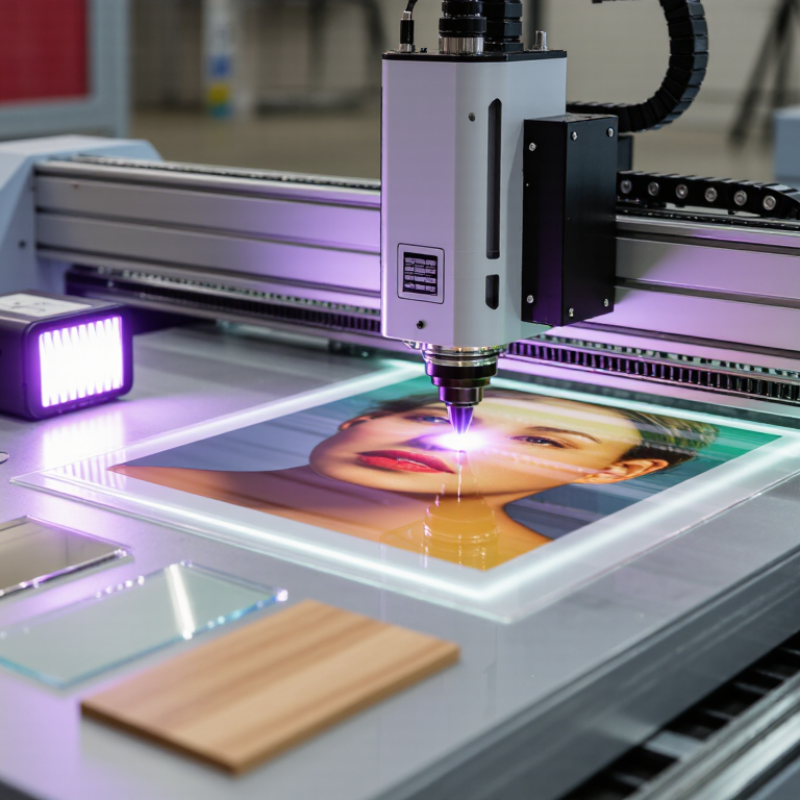
A UV digital printing machine deposits small drops of ink onto a surface, then uses ultraviolet light to cure them almost immediately. That quick cure allows printing on materials that absorb little or no ink. Still, “prints on almost anything” is an exaggeration. Surface energy, coating, flexibility, and heat tolerance all affect the result.
Common materials include acrylic, glass, aluminum, coated wood, PVC, and some flexible films. A smooth acrylic sheet can produce crisp text, while dusty or oily glass may show weak adhesion. Clean the surface and test a small sample first.
Some jobs need a primer; others benefit from white ink beneath colors, especially on clear or dark stock. White ink adds opacity, but it can increase setup time and ink use.
Printing configurations should match the material and job size. Flatbed machines hold rigid sheets in place, while roll-to-roll systems feed flexible media such as banners and films. Hybrid systems handle both, though changeovers can take time. UV lamps cure each pass, and adjustable fixtures help maintain the correct print distance.
Small details matter. A warped panel can shift out of focus. I would not assume a successful test on one coating guarantees the same result on another. Check adhesion after curing, and inspect edges for lifting or cracking.
That extra test feels slow, but it can prevent a larger batch from becoming waste.