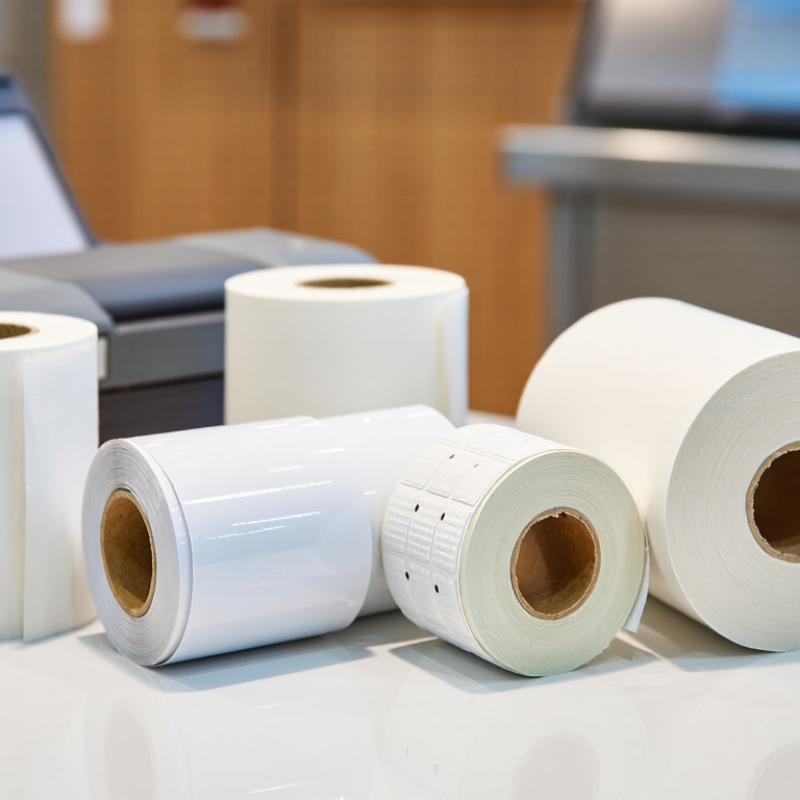
| Standard Direct Thermal Receipt Rolls | A heated printhead activates a heat-sensitive coating on the paper, creating the printed image without ink or a ribbon. | Point-of-sale receipts, order slips, and short-term transaction records. | Simple printer setup and fast printing; the image is formed directly on the paper surface. | Heat, sunlight, friction, and some chemicals can cause fading or darkening. Not ideal for records requiring long-term legibility. |
| Top-Coated Thermal Receipt Rolls | The thermal imaging layer is covered by an additional protective surface coating. | Receipts and records handled frequently or exposed to more moisture and abrasion than ordinary indoor receipts. | The topcoat can improve resistance to handling, moisture, oil, or abrasion compared with an uncoated grade; performance varies by product. | A protective coating does not make the print immune to heat, light, or chemical exposure. Check the supplier’s stated resistance and printer compatibility. |
| BPA-Free or Phenol-Free Thermal Rolls | These are direct thermal papers identified by the chemistry of their heat-sensitive coating or developer system. | Receipts and records where a buyer specifies particular chemical-content requirements. | “BPA-free” means the paper is made without bisphenol A; “phenol-free” refers to formulations made without phenolic developers. The terms are not interchangeable. | Confirm the exact formulation and applicable compliance documentation. Chemical designation alone does not indicate image life or print durability. |
| Direct Thermal Label Rolls | A heat-sensitive label facestock darkens where the printhead applies heat; the roll commonly includes adhesive and a release liner. | Shipping labels, product identification, and short-life inventory or logistics labels. | Prints without a thermal-transfer ribbon, reducing consumables and simplifying the printing process. | Direct thermal images can fade with heat, light, and abrasion. Match label size, adhesive, core, and roll dimensions to the printer and application. |
| Linerless Thermal Label Rolls | Direct thermal label material is supplied without a separate backing liner; a release surface helps the wound labels separate. | Variable-length receipts or labels in food service, retail, and delivery workflows. | Eliminates the disposable liner and can allow variable label lengths, depending on the printer and feed system. | Requires a compatible linerless printer, adhesive and release construction, and often a suitable cutter. It is not interchangeable with every standard label roll. |
| Thermal Ticket Rolls | Thermal paper is printed directly by a heated printhead, as with a receipt roll; ticket stock may have specifications suited to its intended handling. | Queue tickets, event admission, transport, and other short-format ticketing applications. | Often selected by ticket size, roll dimensions, and any required features such as pre-printing or controlled ticket separation. | Confirm the printer’s supported width, core diameter, roll diameter, and any cutter or perforation requirements. |
| Thermal Transfer Label Rolls | A thermal printhead transfers ink from a separate ribbon onto the label material; the roll itself does not need to be direct-thermal paper. | Product, asset, and logistics labels where the application calls for a different media or print-durability combination. | Supports a choice of label facestock and ribbon combinations, including paper and synthetic media. | Requires a compatible thermal-transfer printer and ribbon. Select the ribbon and label material together for the surface and conditions involved. |