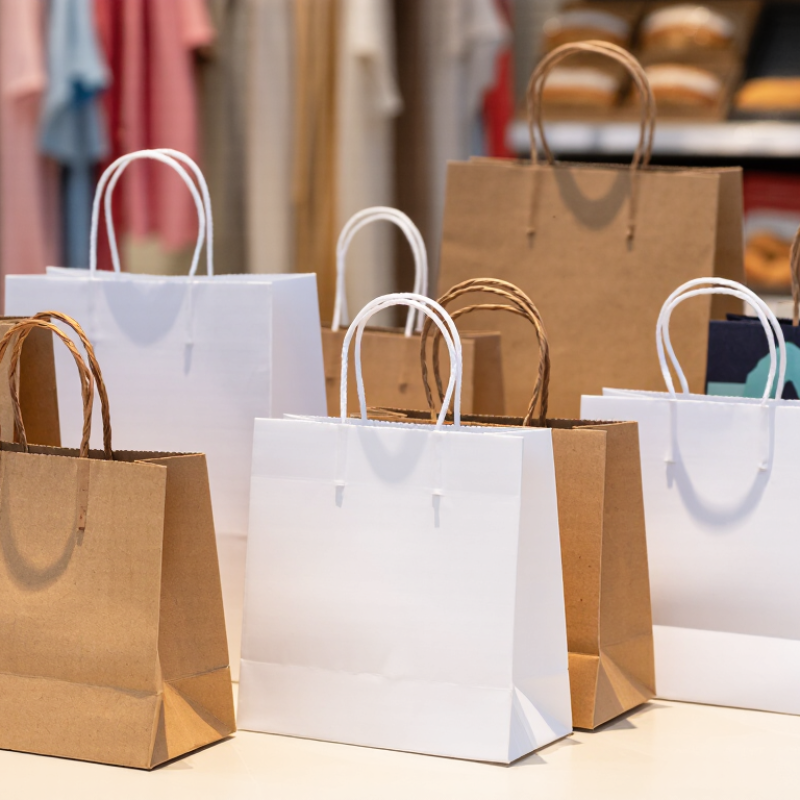
| Primary Paper Materials | Kraft paper, coated paper, recycled paper, and specialty paper | Brown or white kraft; recycled content; coated or textured finishes | Material selection depends on strength, appearance, print quality, and sustainability requirements. |
| Paper Basis Weight | Multiple paper thicknesses for light, medium, and heavy retail applications | Approximately 80–250 gsm for common retail bags | Higher gsm generally improves stiffness and load-bearing performance but can increase material cost. |
| Bag Construction | Flat-bottom, square-bottom, twisted-handle, and die-cut handle formats | Machine-made or partially hand-finished structures | Construction can be adapted to product weight, shelf presentation, packing speed, and storage requirements. |
| Bag Size | Small accessory bags through large apparel and gift bags | Custom width, gusset, and height; dimensions specified in millimeters or inches | A production drawing or physical sample is normally used to confirm final dimensions. |
| Handle Types | Twisted paper handles, flat paper handles, cotton or polyester rope, and die-cut handles | Various handle colors, lengths, diameters, and attachment methods | Handle selection should match bag size, expected load, comfort requirements, and visual design. |
| Printing Methods | Flexographic, offset, gravure, and digital printing | One-color to multi-color printing; spot colors or process colors | The suitable method depends on artwork complexity, order volume, paper surface, and color requirements. |
| Surface Finishes | Matte or gloss lamination, aqueous coating, varnish, embossing, and foil stamping | Natural kraft appearance; matte, glossy, textured, metallic, or raised details | Finishes affect appearance, surface protection, recyclability, and overall unit cost. |
| Reinforcement Options | Reinforced bases, folded top edges, handle patches, and inner support boards | Single or multiple reinforcement points based on load requirements | Reinforcement is useful for heavier products and repeated handling during retail distribution. |
| Sustainability Features | Recycled paper, FSC-certified paper when specified, water-based inks, and recyclable constructions | Virgin fiber, post-consumer recycled content, or mixed-fiber paper | Certification claims should be verified through valid documentation for the selected material and production order. |
| Quality Control | Inspection of dimensions, paper weight, print registration, handle attachment, and bag strength | Pre-production approval, in-process inspection, and final random inspection | Acceptance criteria should be agreed in advance using approved samples and written specifications. |
| Sampling Process | Digital artwork proof, blank structural sample, or printed pre-production sample | Sample timing varies according to construction, printing, and finishing complexity | Approval should cover color, dimensions, handle placement, paper texture, and packaging method. |
| Typical End Uses | Fashion, footwear, cosmetics, food service, gifts, events, bookstores, and general retail | Lightweight promotional bags to reinforced premium shopping bags | The recommended specification should be based on product weight, moisture exposure, carrying distance, and brand presentation. |