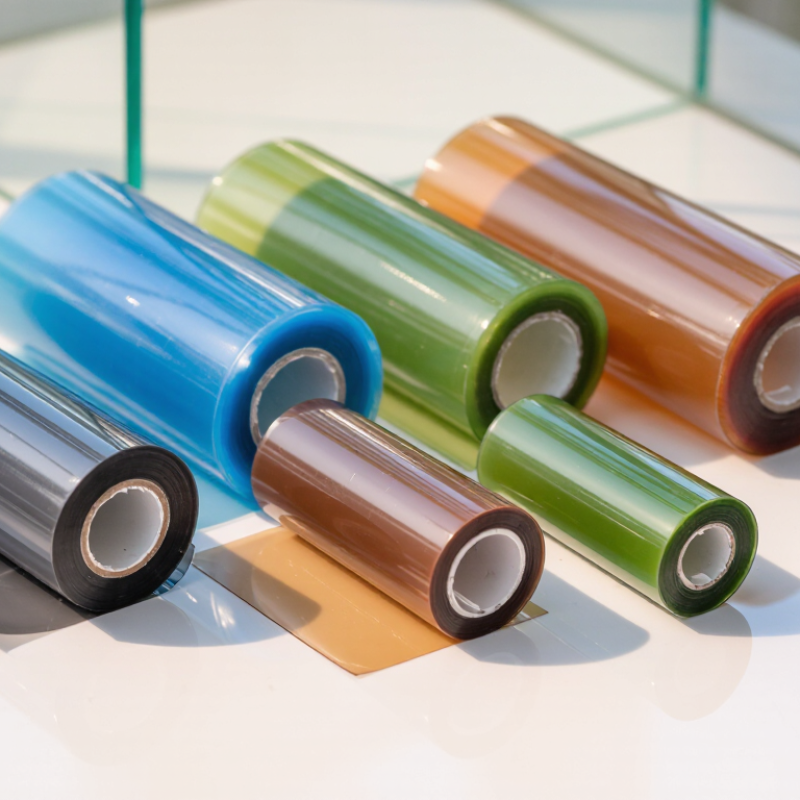
| 1 | Dyed polyester film | PET | Colorants are incorporated into or applied to the film. | Available in a wide range of shades and light-transmission levels; performance depends on dye stability and construction. | Window films, graphic overlays, and decorative laminates. |
| 2 | Metallized tinted polyester film | PET with a thin metal coating | A metal layer provides reflective properties; tint may be added through dyes or coatings. | Can reflect solar energy and create a reflective appearance; metal layers may affect radio-frequency signal transmission. | Architectural glazing films and reflective packaging laminates. |
| 3 | Ceramic-coated tinted film | PET or another clear polymer film | Ceramic particles are incorporated into a coating or film layer; color can be separately formulated. | Non-metal construction avoids the metal layer associated with some signal-interference concerns; heat and light performance varies by design. | Automotive and architectural window applications. |
| 4 | Colored PVC film | PVC | Pigments or dyes are compounded into the polymer or applied as a coating. | Can be made flexible or rigid and supplied in opaque, translucent, or transparent grades; formulation influences flexibility and weathering. | Signage, surface decoration, stationery, and protective coverings. |
| 5 | Colored polyethylene film | LDPE, LLDPE, or HDPE | Color pigments are typically blended into the polymer before film extrusion. | Flexible, moisture-resistant, and available in varying strengths and transparencies; properties depend on resin grade and film structure. | Packaging, agricultural covers, liners, and protective sheeting. |
| 6 | Colored polypropylene film | PP, including cast or oriented grades | Pigments or color concentrates are incorporated during processing. | Often offers good stiffness and moisture resistance; clarity, sealability, and impact behavior depend on grade and orientation. | Flexible packaging, labels, stationery, and decorative films. |
| 7 | Tinted polycarbonate film | PC | Colorants are compounded into the resin or applied in a coating. | Known for impact resistance and dimensional stability; optical clarity and UV resistance depend on grade and any protective layers. | Equipment guards, lighting components, displays, and formed parts. |
| 8 | Tinted acrylic film | PMMA | Color is introduced through pigments, dyes, or surface coatings. | Can provide high optical clarity and weatherability; flexibility and impact resistance are grade-dependent. | Displays, lighting, glazing laminates, and decorative surfaces. |
| 9 | Colored TPU film | Thermoplastic polyurethane | Colorants are compounded into the TPU or added as a coating or laminate layer. | Typically flexible and abrasion-resistant; elasticity, chemical resistance, and clarity vary with TPU chemistry. | Protective laminates, flexible components, and specialty surface films. |
| 10 | Tinted EVA film | Ethylene-vinyl acetate copolymer | Dyes or pigments are added to the polymer formulation. | Used as a flexible encapsulating or bonding layer; optical transmission and durability depend on formulation and processing. | Laminated glass and photovoltaic module encapsulation. |