What is a heat sealer machine and how does it work?
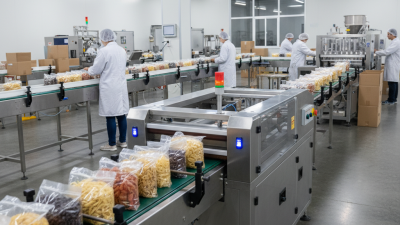
A heat sealer machine is an essential tool in many industries. Its main function is to seal plastic materials for packaging. This process ensures that products remain fresh and uncontaminated. Whether you are in the food industry, electronics, or manufacturing, a heat sealer machine plays a vital role.
The machine uses heat to join two surfaces of plastic. It applies pressure and temperature to create a strong seal. This process can vary based on the materials being used. Different types of heat sealers exist, each designed for specific needs. However, users may struggle with settings and material compatibility at times. This reflects the need for training and understanding the machine's capabilities.
Understanding how a heat sealer machine works can improve efficiency. Small mistakes in settings can lead to poor seals or damaged products. Attention to detail is crucial. Learning from these errors can enhance future performance. Overall, mastering this tool offers significant benefits to various sectors.
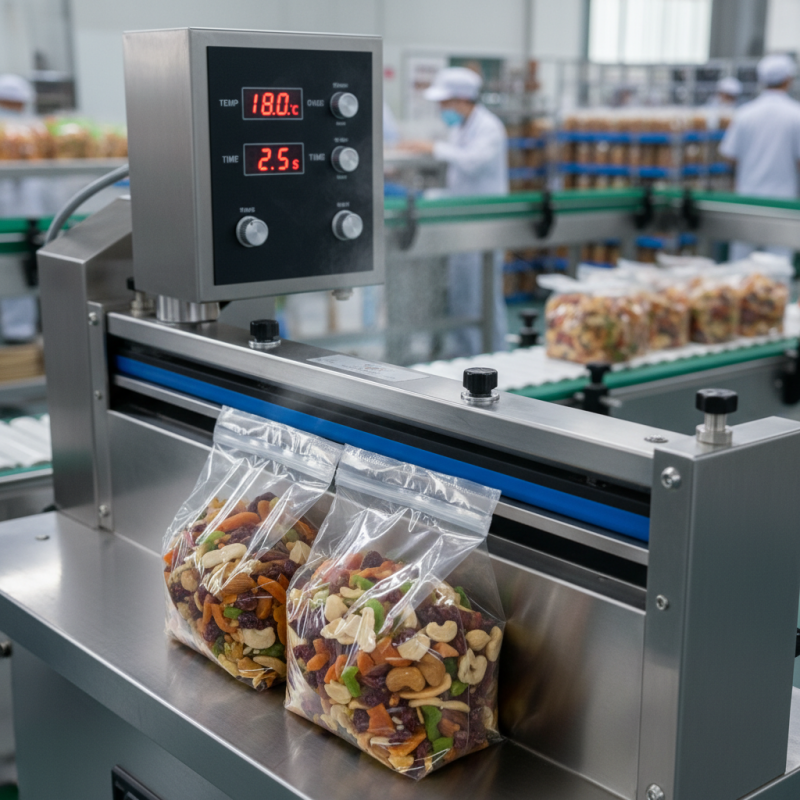
What is a Heat Sealer Machine? Definition and Overview
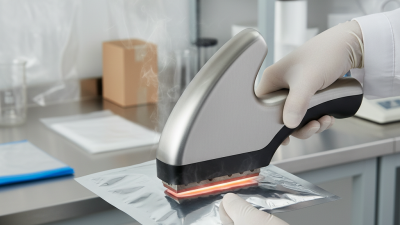
A heat sealer machine is a device used for sealing plastic bags or pouches. It applies heat to the surfaces of the material. This heat causes a bond between the layers, creating a strong seal. In industries like food packaging, this is crucial. According to a report by Grand View Research, the global heat sealing equipment market size was valued at over $2.3 billion in 2020. It's expected to grow as companies seek efficient sealing solutions.
These machines can be handheld or automated. They vary in size and complexity, offering different sealing methods. Users often face challenges with inconsistent seals. Factors like temperature, pressure, and material type matter. A mismatch can lead to leaks or weak seals. The importance of proper training cannot be overstated. Users need to understand their specific equipment for optimal results.
In food processing, effective sealing is essential for prolonging shelf life. A study by the Food Processing Institute indicates that heat sealing can reduce spoilage by up to 30%. However, improper sealing can result in microbial growth. Businesses must continually assess their sealing processes. Regular maintenance of heat sealers ensures they perform reliably. Investing in quality equipment can lead to better efficiency and product safety.
Heat Sealer Machine Usage Statistics
This chart displays the application of heat sealer machines across different industries, showcasing the most common usage areas.
Types of Heat Sealers: Impulse, Constant, and Band Sealers
Heat sealers are essential tools for packaging products efficiently. They create seals on plastic and similar materials through heat application. Among the various types are impulse, constant, and band sealers. Each type has unique features.
Impulse sealers are widely used. They generate heat only when the sealing arm is pressed down. This method conserves energy and prevents overheating. These sealers are often ideal for small-scale operations. They can be quite affordable, saving businesses costs. However, they may not be suitable for high-volume needs.
Constant sealers operate continuously. They provide consistent heat, making them great for mass production. This type is faster but consumes more power. Band sealers are a variant of constant sealers. They have a conveyor belt that moves products through the sealing area. This design is useful for high-speed packaging.
When selecting a heat sealer, consider your production volume. A small operation might benefit more from an impulse sealer. Larger operations likely need a constant or band sealer. Make sure to assess material types as well. Different materials require specific sealing methods.
Remember, don’t rush into your choice. It’s important to analyze your needs carefully. A wrong choice could lead to inefficiencies. Sometimes, testing with small batches can reveal the best fit.
What is a Heat Sealer Machine and How Does It Work?
| Type of Heat Sealer |
Description |
Applications |
Advantages |
Disadvantages |
| Impulse Sealer |
Uses a short burst of heat to seal thermoplastic materials. |
Food packaging, plastic pouches, and bags. |
Quick operation, energy-efficient, and produces strong seals. |
Not suitable for thicker materials and requires cooling time between seals. |
| Constant Heat Sealer |
Uses continuous heat to create seals; ideal for high-volume production. |
Industrial packaging, medical supplies, and pharmaceuticals. |
Allows high-speed sealing and consistent seal quality. |
May overheat materials if not monitored closely. |
| Band Sealer |
Utilizes a continuous band to seal packages, suitable for large batches. |
Food products, chemicals, and bulk storage bags. |
Automated operation and varying speeds accommodate different production needs. |
Higher initial investment and complexity in setup. |
Core Components of a Heat Sealer: Elements and Mechanisms
A heat sealer machine is vital in packaging processes. It uses heat to bond materials, primarily plastics. The main components include heating elements, pressure mechanisms, and cooling sections. Each part plays a specific role in sealing integrity.
Heating elements are often made of metal. They are responsible for generating the necessary heat to melt the material’s surface. According to industry reports, temperature control is crucial. An accurate temperature range ensures proper sealing without damaging the product.
Pressure mechanisms apply force, bringing the materials together. This pressure aids in creating a strong seal.
Cooling sections allow the sealed area to solidify. Without proper cooling, seals may remain weak. Poor seals can lead to product loss. Industry data suggests that up to 20% of packaging failures stem from inadequate sealing techniques. Reflecting on this, operators should constantly check temperatures and pressures. Ignoring these factors can result in costly errors and waste.
How Heat Sealers Operate: The Sealing Process Explained
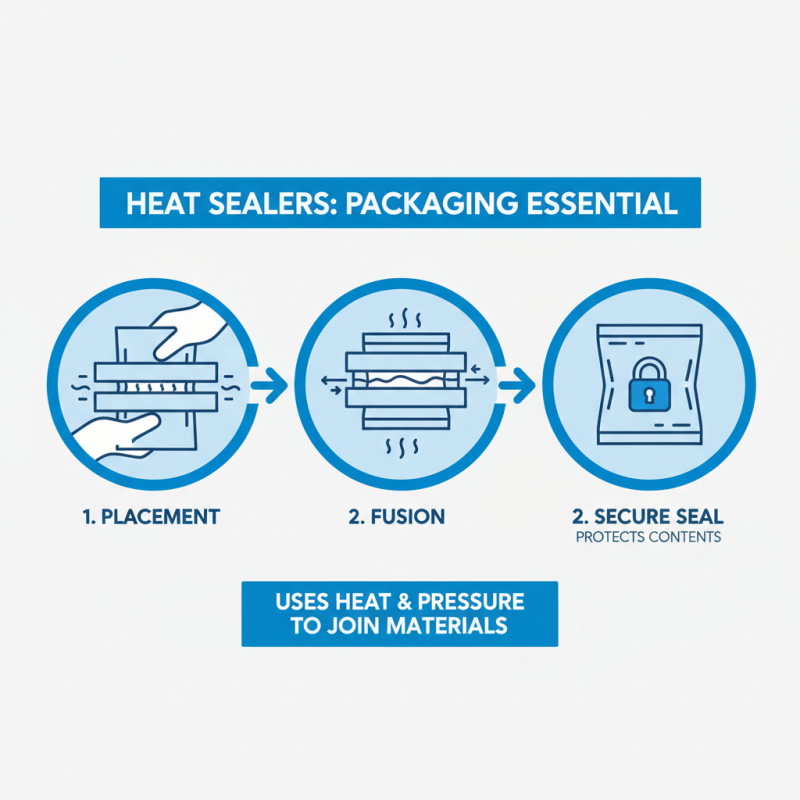
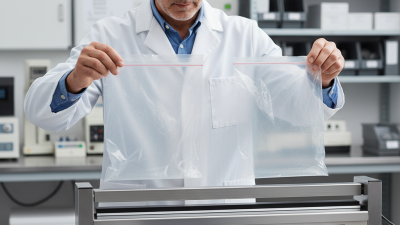
Heat sealers are essential tools in packaging and sealing products. They use heat and pressure to fuse materials together. The process begins when the operator places the plastic or foil between two heated sealing jaws. When the machine is activated, the jaws apply heat, melting the edges of the material. This fusion creates a secure seal that protects the contents inside.
The heating elements can be adjusted for different materials and thicknesses. Operators need to find the right temperature and pressure for optimal results. Too much heat can damage the material, while not enough may result in weak seals. It requires practice to master these adjustments. Moreover, inconsistent sealing can lead to product waste and frustration. Operators often reflect on their techniques to improve efficiency and quality.
In addition to temperature controls, timing matters greatly. Sealing time affects the final product's integrity. If the time is too short, the seal might not hold. Too long and the material can burn. Regular testing and calibration are crucial in a production environment. This can be a trial-and-error process, revealing areas for improvement. The sealing process, while straightforward, invites continuous learning and adaptation for better results.
Industry Applications of Heat Sealers: Packaging and Beyond
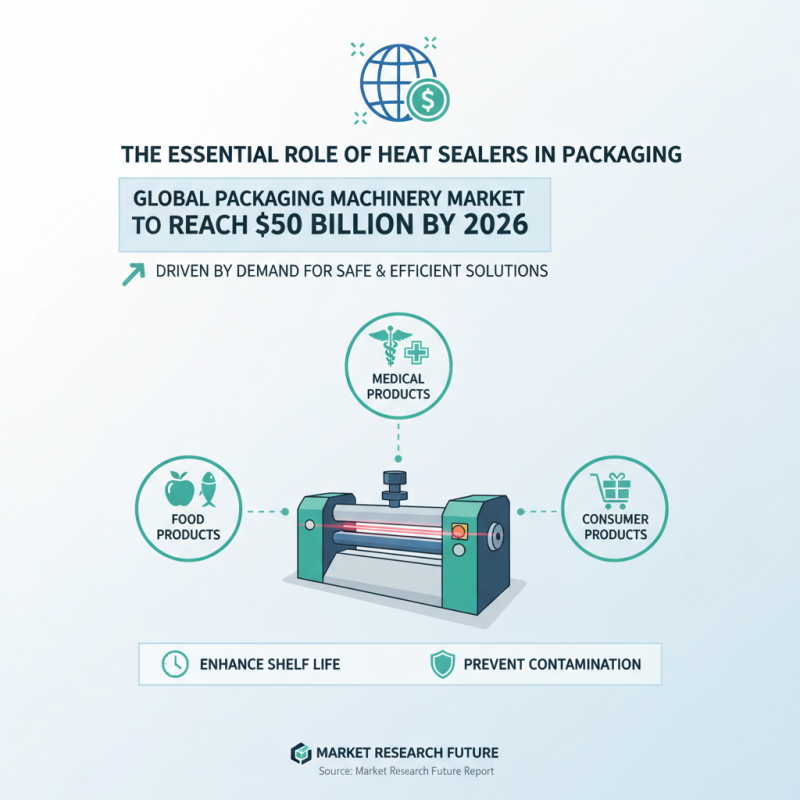
Heat sealers play an essential role in various industries. Their primary application lies in packaging. According to a report by Market Research Future, the global packaging machinery market is expected to reach $50 billion by 2026. This growth is driven by the rising demand for safe and efficient packaging solutions. Heat sealers provide airtight seals for food, medical, and consumer products. They enhance product shelf life and prevent contamination.
Food packaging is a significant area where heat sealers excel. Nearly 30% of food waste is due to inadequate sealing. Effective heat sealing ensures that food stays fresh for longer periods. It also helps reduce spoilage during transportation. Moreover, the pharmaceutical sector relies on heat sealers for packaging sensitive medications. A sealed package maintains drug efficacy and safety.
Beyond packaging, heat sealers find applications in textiles and electronics. In the textile industry, they are used to bond fabrics without sewing. This method reduces production time. Electronics manufacturers use heat sealing to protect sensitive components from moisture. However, there are challenges. Improper temperature settings can lead to weak seals, resulting in product failure. Continuous training is crucial for ensuring quality control. The evolution of heat sealing technology brings both opportunities and obstacles for manufacturers and end-users alike.