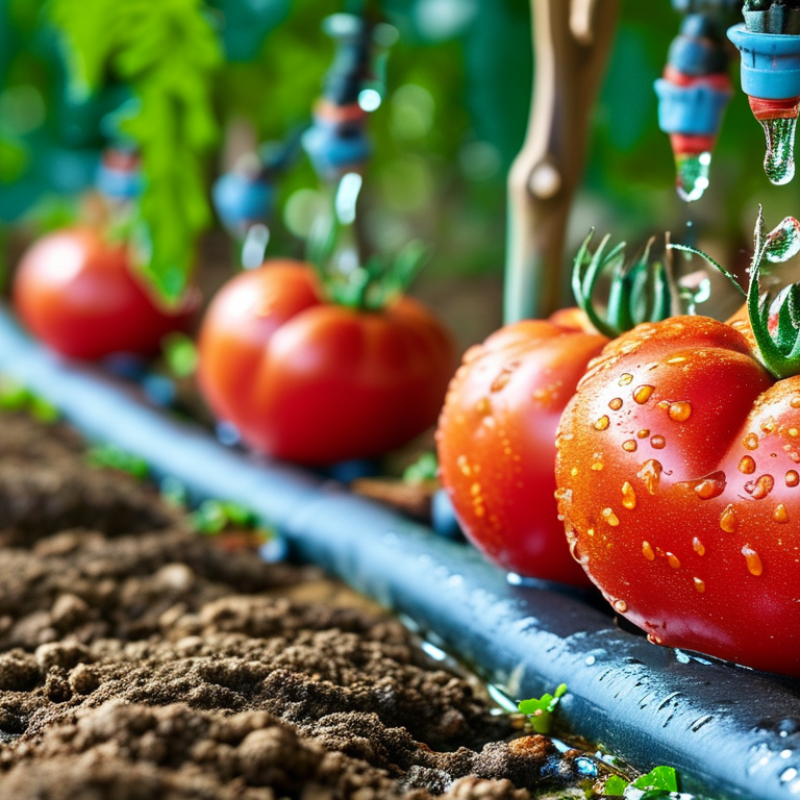
| Definition | Flexible irrigation tubing with built-in water outlets | A drip hose delivers water slowly and directly to the soil near plant roots rather than spraying a large area from above. | It is commonly used for vegetable beds, row crops, containers, landscape plants, and greenhouse growing. |
| Primary Purpose | Localized, low-volume irrigation | Water is applied at or near the root zone, reducing unnecessary wetting of paths, foliage, and bare soil. | Correct layout and pressure control are important for uniform watering. |
| Hose Material | Usually polyethylene or flexible PVC | The tubing forms the water passage and supports the integrated emitters or outlet points. | Material selection affects flexibility, durability, resistance to sunlight, and suitability for seasonal or permanent installation. |
| Common Nominal Diameters | 13 mm, 16 mm, and 20 mm | Larger tubing generally holds more water and can carry flow over longer runs with less pressure loss. | Actual internal diameter varies by wall thickness, so fittings should match the hose specification. |
| Built-In Emitters | Pressure-compensating or non-pressure-compensating types | Emitters regulate the release of water through a small outlet. Pressure-compensating models are designed to maintain a more consistent flow across a wider pressure range. | Emitter type affects uniformity, installation length, and performance on sloped or uneven ground. |
| Emitter Spacing | Commonly 15 cm, 20 cm, 30 cm, or 40 cm | Spacing determines how closely water application points are distributed along the hose. | Closer spacing is often suitable for dense plantings or sandy soil; wider spacing may suit larger plants or heavier soil. |
| Emitter Flow Rate | Typically about 0.5–4.0 L/h per emitter | Each emitter releases a controlled volume of water over time, allowing gradual infiltration into the soil. | The actual rate depends on water pressure, emitter design, temperature, and filtration. |
| Operating Pressure | Often approximately 0.7–1.7 bar for low-pressure drip systems | Water pressure pushes water through the hose and emitters. A pressure regulator helps prevent excessive flow or component damage. | Always follow the hose manufacturer's pressure range; too little pressure can cause uneven discharge, while too much can cause leaks or bursting. |
| Water Source Connection | Supply line, tap adapter, or irrigation manifold | The connection transfers water from the source into the drip hose system. | A shutoff valve is useful for controlling individual zones and isolating the system during maintenance. |
| Filter | Commonly a mesh or disc filter installed upstream | The filter removes particles that could clog small emitter passages. | Filter selection depends on the water quality and the emitter's recommended filtration level; regular cleaning is essential. |
| Pressure Regulator | Device that reduces high supply pressure to a controlled level | It stabilizes the pressure entering the drip hose and helps maintain predictable emitter performance. | A regulator is especially important when the water source is a pressurized household or pump system. |
| End Cap or Flush Valve | Removable closure at the downstream end | It prevents water from escaping during normal operation and can be opened to flush sediment from the hose. | Periodic flushing helps reduce clogging and improves long-term performance. |
| Typical Installation Position | On the soil surface or beneath mulch | Placing the hose near the root zone shortens the distance water must travel through the soil. | Burial depth should be limited and installation should avoid damage from digging tools, rodents, or aggressive roots. |
| Water Distribution Pattern | Small, localized wetting zones around each emitter | Water moves outward and downward through the soil by infiltration and capillary movement. | Soil texture influences the shape: sandy soils tend to spread water more vertically, while clay soils tend to spread it more horizontally. |
| Water-Saving Mechanism | Low-volume application near plant roots | Drip irrigation can reduce evaporation, runoff, and overspray compared with many overhead watering methods when properly designed and maintained. | Water savings are not automatic; leaks, excessive run times, poor spacing, and clogged emitters can reduce efficiency. |
| Maintenance Requirements | Inspect connections, clean the filter, and flush the hose | Maintenance removes particles and identifies leaks or blocked emitters before plant stress occurs. | Check the system at the beginning of the growing season and periodically during operation. |
| Typical Flow Calculation | Total flow = Number of emitters × Flow per emitter | For example, 100 emitters operating at 2 L/h each require approximately 200 L/h, or 3.33 L/min, before pressure losses. | The calculated flow helps determine whether the water source, filter, regulator, and supply line are adequately sized. |
| Main Advantages | Precise application, low evaporation, and flexible layout | The system applies water where it is needed and can be divided into separate irrigation zones. | It works best when the hose is correctly spaced for the crop and the system is protected from clogging. |
| Main Limitations | Potential clogging, pressure sensitivity, and physical damage | Small outlet passages require clean water and adequate filtration, while uneven pressure can create inconsistent watering. | Regular inspection is necessary, particularly in systems using surface water or exposed to sunlight and foot traffic. |