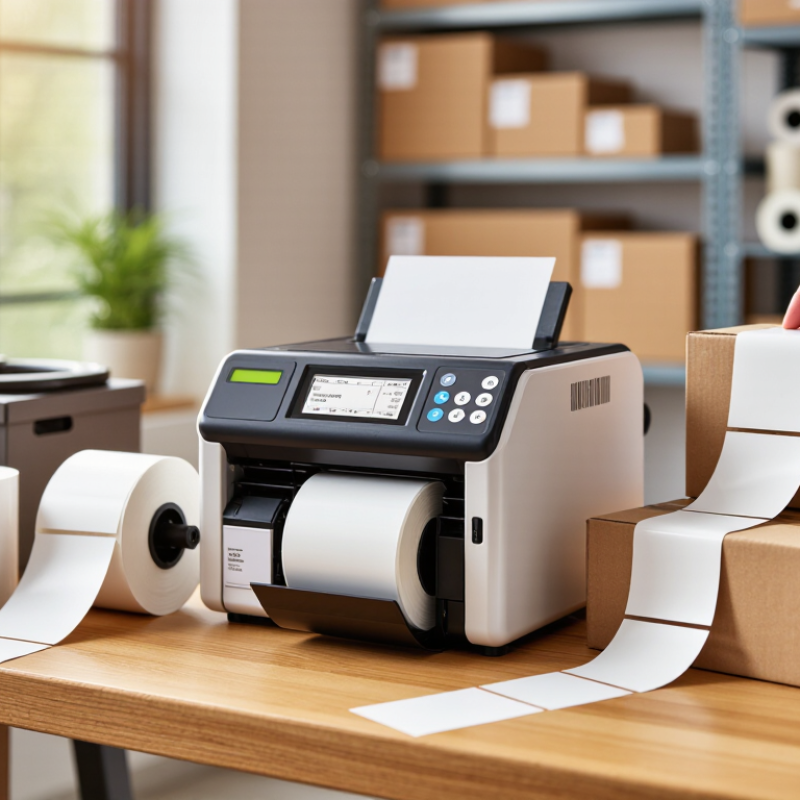
Thermal paper labels create images when a printhead applies heat to a coated surface. Direct thermal printing needs no ink or ribbon, making it useful for shipping labels and short-life inventory tags. However, heat, sunlight, oils, and abrasion can fade or darken the image. Thermal transfer printing uses a ribbon whose ink bonds to the label face, often improving resistance for warehouse, asset, or outdoor identification. Choose based on exposure, scan life, and surface—not printer price alone.
A 2024 Thermal Paper Market Size, Share & Trends Analysis report estimated the global thermal paper market at about US$4.2 billion in 2023, with 6.6% annual growth forecast through 2030. This figure covers thermal paper broadly, not labels alone, but it indicates continuing demand. Match the roll width, core size, adhesive, and coating to both printer and package. A label that curls on a cold carton or smears under a gloved thumb is still a poor choice. Easy to overlook.
Tips: Print a small batch. Scan it after heat exposure, rubbing, and several days on the actual package. Check barcode readability, edge lift, and print darkness. Don’t assume all thermal labels are interchangeable.