3D Barrier Bags, Inc

How to Choose a Commercial Bag Sealing Machine?

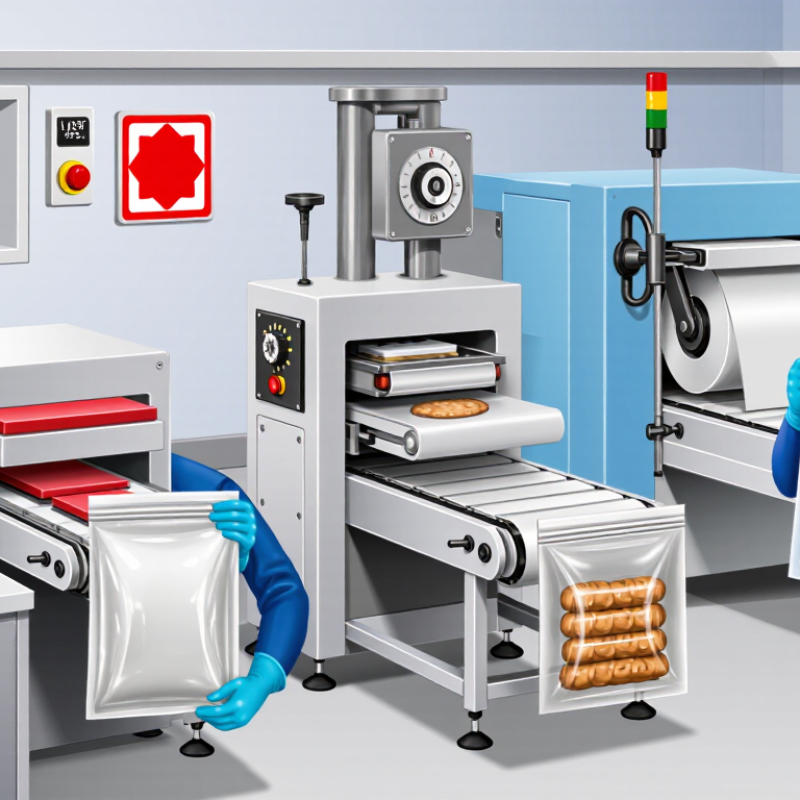
Choosing a commercial bag sealing machine is not simply a matter of comparing prices. It is a practical decision shaped by bag material, product weight, production speed, and workplace conditions. A small bakery may need a compact impulse sealer for occasional batches. A busy food processor may require continuous band sealing with temperature control and date coding.

Start with the package, not the machine brochure. Test the actual bags. Observe how polyethylene, laminated film, and thicker pouches react to heat and pressure. A reliable seal should look even, firm, and clean, without melted edges or hidden channels. Ask suppliers for sample trials, maintenance details, spare-part availability, and documented operating guidance. These steps reveal more than attractive photographs.

Operator experience also matters. A technically advanced machine can underperform when controls are confusing or cleaning takes too long. Check the sealing width, conveyor height, adjustable temperature range, and emergency stop access. Consider noise, power requirements, and the space around the equipment. The first shortlist may be wrong. That is normal.

A careful evaluation should include real production conditions. Run different bag sizes, inspect seals after handling, and record changeover time. Review the results with operators and quality staff. Their observations often expose problems that specifications miss. Choose equipment from a supplier with clear technical support and a traceable service record. The cheapest option may become expensive after repeated downtime, failed seals, or difficult repairs. Good decisions are tested, documented, and willing to change.

How to Choose a Commercial Bag Sealing Machine?

Classify Bag Films by Material and Thickness (PE/PP: 0.02–0.20 mm)

How to Choose a Commercial Bag Sealing Machine?

Film material and thickness should guide your sealing machine choice. Polyethylene (PE) films, from 0.02 to 0.20 mm, are usually soft and flexible. They often seal well with moderate heat and controlled pressure. Thin PE can wrinkle or shrink when overheated. Test it carefully.

Polypropylene (PP) is generally stiffer and may require a higher sealing temperature or longer dwell time. Its surface can feel crisp, especially near 0.05 mm and above. Thickness changes heat transfer significantly. A 0.02 mm film may need a short sealing cycle, while 0.20 mm material often needs more heat and pressure. Impulse sealing can suit many thin PE and PP bags. Constant-heat sealing may provide better control for thicker films or continuous production.

Do not select equipment from thickness alone. Check the actual film structure, coating, bag width, and production speed. In factory testing, I measure seal strength after cooling, not immediately after sealing. That small delay exposes weak bonds. A seal may look clean but still split by hand. It happens.

Machine settings are not universal. Even two PE films with the same thickness can behave differently because of additives or recycled content. Start with low heat, adjust dwell time, and increase pressure gradually. Keep records for each material batch. This process feels slower, but it prevents wasted bags and unreliable seals.

Match Production Volume with Sealing Speeds of 8–30 m/min

How to Choose a Commercial Bag Sealing Machine?

Match Production Volume with Sealing Speeds of 8–30 m/min

Choosing a commercial bag sealing machine starts with your actual production volume, not the highest advertised speed. Machines running at 8–12 m/min can suit small shops, seasonal products, or lines with frequent bag changes. They give operators more control when aligning uneven film edges. Speed is not everything. Test real bags.

For steady production, 15–22 m/min often provides a practical balance between output and sealing consistency. At this range, check the bag material, thickness, and seal width carefully. A thin plastic pouch may move smoothly, while a coated paper bag can drag or wrinkle.

In my experience, a faster setting can increase rejected packages when the operator has little time to inspect the seal. Small details matter.

25–30 m/min

High-volume facilities may need 25–30 m/min, especially when filling equipment runs continuously. However, the sealer must match the conveyor, filling accuracy, and cooling time. Measure sealed bags per minute during a real shift, including pauses and adjustments.

A machine rated at 30 m/min may deliver less in daily use. That is normal, but it should be recorded honestly.

Also review temperature control, pressure adjustment, maintenance access, and emergency stopping features.

A short trial with your own bags often reveals more than a specification sheet. Perhaps this is the step many buyers overlook.

Select Seal Width and Temperature Ranges of 2–15 mm and 0–300°C

How to Choose a Commercial Bag Sealing Machine?

A commercial bag sealer should match the film, product, and production speed. Seal width is a practical starting point. Most machines offer widths from 2 to 15 mm. A 2–4 mm seal suits light pouches and dry goods. Heavier bags often need 6–15 mm for better mechanical strength. Wider is not automatically safer. Excess heat can shrink film, wrinkle the edge, or weaken the seal.

Temperature control matters just as much. A 0–300°C range provides flexibility, but many plastic films seal between 100°C and 200°C. Paper-laminated structures may require different settings. Test temperature, pressure, and dwell time together. ASTM F88/F88M recommends measuring seal strength through controlled testing, not visual inspection alone. Smithers reported the flexible packaging market at about $201.8 billion in 2023, while Grand View Research estimated $261.3 billion. Their different scopes show why equipment specifications need careful interpretation.

Tips: Start with the narrowest reliable seal. Run ten sample bags at low, medium, and high temperatures. Check leaks after cooling, not immediately. Record the settings beside the machine. In production trials, operators sometimes increase heat to fix poor pressure. That can hide the real problem. A worn sealing jaw may need maintenance instead. Temperature displays can also drift, so periodic verification is worth the small effort.

How to Choose a Commercial Bag Sealing Machine? — Select Seal Width and Temperature Ranges of 2–15 mm and 0–300°C
Selection Dimension Recommended Specification Suitable Packaging or Application Practical Selection Guidance
Seal width 2–3 mm Lightweight polyethylene bags, small retail pouches and low-load packaging Choose a narrow seal when material use and compact packaging are priorities. Confirm that the film is clean and properly aligned.
Seal width 4–6 mm General-purpose PE, PP and laminated film bags A versatile range for routine commercial packaging where seal appearance, strength and production speed must be balanced.
Seal width 8–10 mm Thicker bags, stand-up pouches, high-barrier laminates and products requiring additional seal strength Use a wider sealing area when the package may experience heavier handling, internal pressure or a more demanding distribution environment.
Seal width 12–15 mm Heavy-duty sacks, thick multilayer films and industrial or bulk packaging Suitable when a broad, reinforced seal is required. The machine must provide sufficient jaw pressure and uniform heat across the full width.
Temperature Selection by Common Heat-Sealable Material
Low-density polyethylene (LDPE) Approximately 110–170°C Flexible PE bags, liners and lightweight pouches Begin at the lower end and increase gradually until a continuous, smooth seal is formed without film shrinkage or burn-through.
High-density polyethylene (HDPE) Approximately 130–190°C Grocery-style bags, liners and tougher polyethylene packaging Thicker films generally need more heat, longer dwell time or greater pressure than thin films made from the same polymer.
Polypropylene (PP) Approximately 140–220°C Clear PP bags, woven PP packaging and selected food or retail pouches Use a stable temperature and adequate cooling time to reduce distortion and improve seal consistency.
Polyester or PET laminates Approximately 150–230°C Printed pouches and laminates where PET provides strength or dimensional stability PET itself has a high melting point, so sealing is normally controlled by the heat-seal layer laminated to it, such as PE or PP.
Aluminum foil laminates Approximately 150–250°C High-barrier pharmaceutical, food, chemical and specialty packaging Set the temperature according to the inner heat-seal coating rather than the aluminum layer. Use controlled pressure to avoid wrinkles.
PVC-based films Approximately 120–180°C Selected clear bags, sleeves and specialty packaging Excessive heat can cause shrinkage, deformation or discoloration. Verify compatibility with the film supplier before production.
Machine Configuration and Operating Factors
Temperature controller range 0–300°C Applications using heat-sensitive films through higher-temperature multilayer materials A broad controller range provides flexibility, but the correct operating temperature is normally well below 300°C and depends on film construction and thickness.
Film thickness Approximately 30–250 μm Thin retail bags through heavy-duty flexible packaging Thicker materials usually require a wider seal, higher jaw pressure, longer dwell time or a combination of these settings.
Sealing method Impulse or constant heat Impulse: thermoplastic films and intermittent sealing. Constant heat: continuous production and thicker laminates. Impulse sealing limits heat exposure to the sealing cycle. Constant-heat systems are often preferred for high-throughput work and demanding multilayer structures.
Operating speed Intermittent or continuous Small-batch packing, retail fulfillment, food packaging and industrial production lines Choose a continuous band-style system for higher throughput; choose an intermittent bar sealer when flexibility and product changeovers are more important.
Seal quality check Continuous, wrinkle-free and leak-resistant seal All commercial packaging applications Inspect seal width, uniformity, adhesion and resistance to peeling. Test the finished package using the actual film, product load and handling conditions.
Recommended starting setup 4–6 mm seal width; 120–180°C starting range Common PE and light-to-medium laminated bags Use this only as an initial trial point. Adjust temperature, pressure and dwell time together, because increasing temperature alone can damage the film.
Note: Temperature values are practical starting ranges for common flexible packaging materials. Actual settings vary with film formulation, heat-seal coating, thickness, seal-bar pressure, dwell time, machine design and production speed. Always validate the final setting with representative production samples.

Verify Seal Strength Using ASTM F88 and ISO 11607 Standards

How to Choose a Commercial Bag Sealing Machine?

A commercial bag sealing machine should produce repeatable seals, not merely attractive ones. In practical testing, I check temperature, pressure, dwell time, and cooling behavior. A perfect-looking seal can still fail. The machine should allow precise adjustments and stable settings during long production runs. Digital displays help, but recorded process data is more valuable. Operators also need clear calibration procedures and accessible maintenance points.

ASTM F88/F88M measures the force required to separate a flexible package seal.

It helps identify weak areas, inconsistent sealing, and changes between production lots. Prepare representative samples, condition them properly, and test multiple strips from different positions. Use a calibrated tensile tester and record the average and individual results. One strong specimen proves little. Peel direction and test speed must remain consistent. Small setup errors can distort the findings.

ISO 11607 supports the validation of packaging systems for terminally sterilized medical devices.

It also requires controlled forming, sealing, and assembly processes. Therefore, machine selection should support documented validation, not just fast output. Seal temperature should remain uniform across the sealing surface. Pressure must be sufficient without damaging the packaging material. Dwell time needs repeatable control. I would challenge any machine that offers only one fixed setting. Materials change, and real production is rarely perfect. Test after equipment adjustments, storage, and sterilization exposure when applicable. Keep failed samples. They often reveal more than successful ones.

Check Food-Contact Compliance Under FDA 21 CFR 177 and EU 10/2011

Choosing a commercial bag sealing machine begins with the packaging film, not the heater. The sealant layer, ink, adhesive, and temperature profile must suit the food-contact application. FDA 21 CFR 177 covers many polymeric materials used in food packaging, while EU Regulation 10/2011 requires plastic materials to meet overall and specific migration limits. The machine itself may not be the food-contact article, but its hot jaws can transfer residues or damage compliant layers.

Ask the supplier for stainless-steel contact surfaces, stable temperature control, and documented cleaning procedures. Request migration evidence for the complete bag structure, not only the resin. EU testing should reflect the intended food type, temperature, and storage time. FDA compliance also depends on the specific material, additives, and conditions of use. A declaration alone is useful, but incomplete without test conditions. This is often missed.

Smithers’ The Future of Flexible Packaging to 2028 reports continued growth in flexible food packaging, increasing pressure for reliable high-speed sealing. The European Commission’s RASFF Annual Report 2023 recorded thousands of food-safety notifications, although packaging was only one category. That figure shows why traceability matters. Keep batch records, seal-temperature logs, and cleaning checks. A small seal wrinkle can expose inner layers. I would not accept “FDA approved” as a machine specification. It is an oversimplification.

Food-Contact Compliance Checkpoints: FDA 21 CFR 177 vs EU 10/2011

This screening chart compares regulatory features relevant to packaging materials used with a commercial bag sealing machine. A value of 1 means the feature is expressly represented in the cited framework; 0 means there is no single general requirement of that type in the cited framework. FDA 21 CFR 177 is material- and use-specific, while EU 10/2011 includes overall migration limits of 10 mg/dm² and 60 mg/kg for applicable plastic food-contact materials. The sealing machine should support controlled temperature, pressure, dwell time, traceability, and hygienic operation; equipment alone does not establish food-contact compliance.