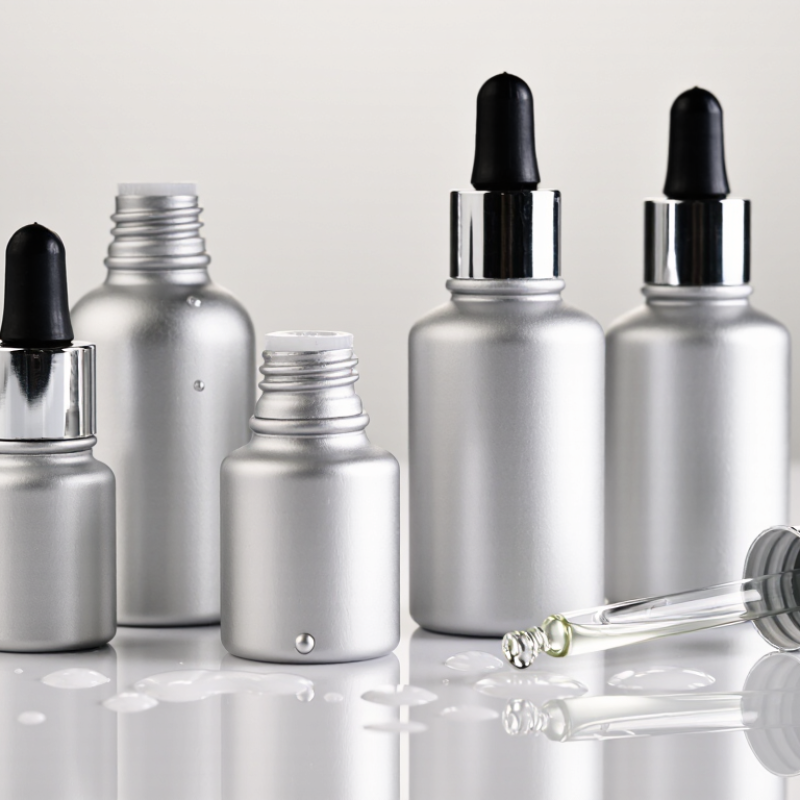
A dropper bottle can look sound while its liner quietly changes the formula. The liner sits inside the cap and may contact liquid when the bottle tips. Check that its material is suitable for your formula, especially if it contains oils, acids, or fragrance components. Compatibility depends on the full mixture, not one ingredient alone.
Do a small, controlled test before filling a production run. Store samples upright and on their sides, then inspect them over time. Look for liner swelling, softening, cracks, leaks, or a new odor. Compare the formula’s color and texture with an untouched sample. These signs are clues, not proof; a stable appearance cannot rule out every interaction. Keep notes on the formula, liner type, temperature, and test duration. It is easy to skip that record when a sample seems fine.
The bottle itself matters, too. An interior coating can help separate the formula from aluminum, but the dropper assembly remains part of the contact system. Test the assembled package, not just the bottle. Check that the pipette draws smoothly and returns the expected amount after repeated use. A dropper that leaks or delivers unevenly can expose the formula to more air and make dosing less consistent. Real use can be messy. Include it in the test.