Top Tips for Choosing a Commercial Heat Sealer Machine at Canton Fair?
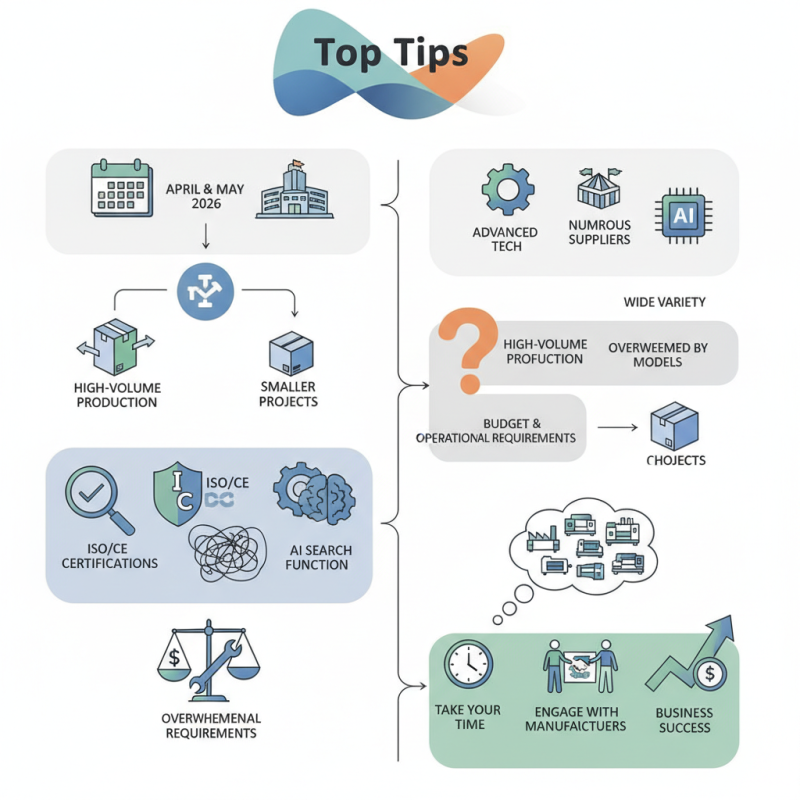
Choosing the right commercial heat sealer machine is crucial for your business. At the upcoming Canton Fair, this selection process becomes even more vital. This event, scheduled for April and May 2026, will showcase advanced manufacturing technologies. The fair will feature numerous suppliers with cutting-edge machines.
Understanding your specific needs is essential. Do you require a machine for high-volume production or for smaller projects? Consider the features of the machines on display. Look for options equipped with AI technology that enhances efficiency and user experience. With the fair's new AI search function, finding suppliers with ISO or CE certifications will be easier.
However, the wide variety of choices may lead to confusion. It's important to reflect on the operational requirements and budget constraints. You might feel overwhelmed by the many models. Take your time to evaluate each machine's capabilities. Engage with manufacturers to gather in-depth knowledge about their products. Selecting the right commercial heat sealer machine can significantly impact your business success.
Understanding the Different Types of Commercial Heat Sealers Available
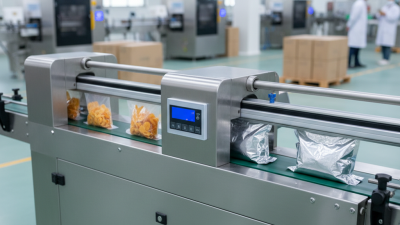
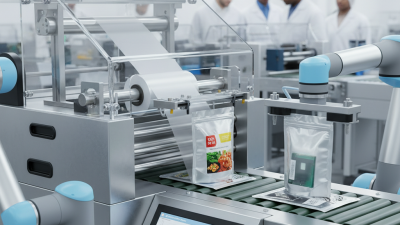
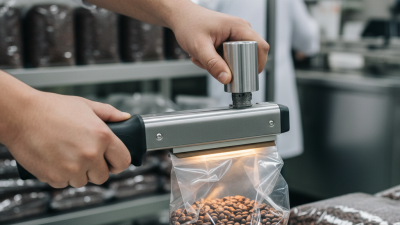
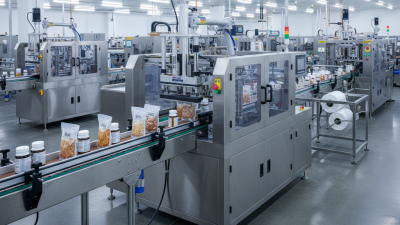
When selecting a commercial heat sealer, understanding the various types is crucial. Heat sealers come in different styles, each designed for specific applications. For example, impulse sealers are popular for short-run packaging. They require a brief burst of power, sealing items quickly. In contrast, continuous sealers are ideal for high-volume production. They offer consistent performance over longer periods, often seen in large-scale manufacturing.
Data from industry reports shows that the demand for heat sealers has increased significantly, particularly in food packaging. The rise in e-commerce has driven manufacturers to seek efficient sealing solutions. A report indicates that the global heat sealing equipment market is projected to grow at a CAGR of 5.2% from 2021 to 2027. This suggests an expanding interest in robust packaging solutions across sectors.
Choosing the right machine can be a challenging task. It requires understanding your specific needs and the materials being used. Not all sealers perform well with every type of film. Some users encounter performance issues, like inadequate seals, if the right machine is not chosen. Considerations such as film type and seal strength are critical in ensuring product integrity. Proper research is necessary to avoid costly mistakes.
Top Tips for Choosing a Commercial Heat Sealer Machine
Evaluating Heat Sealer Specifications: Power, Speed, and Temperature Control
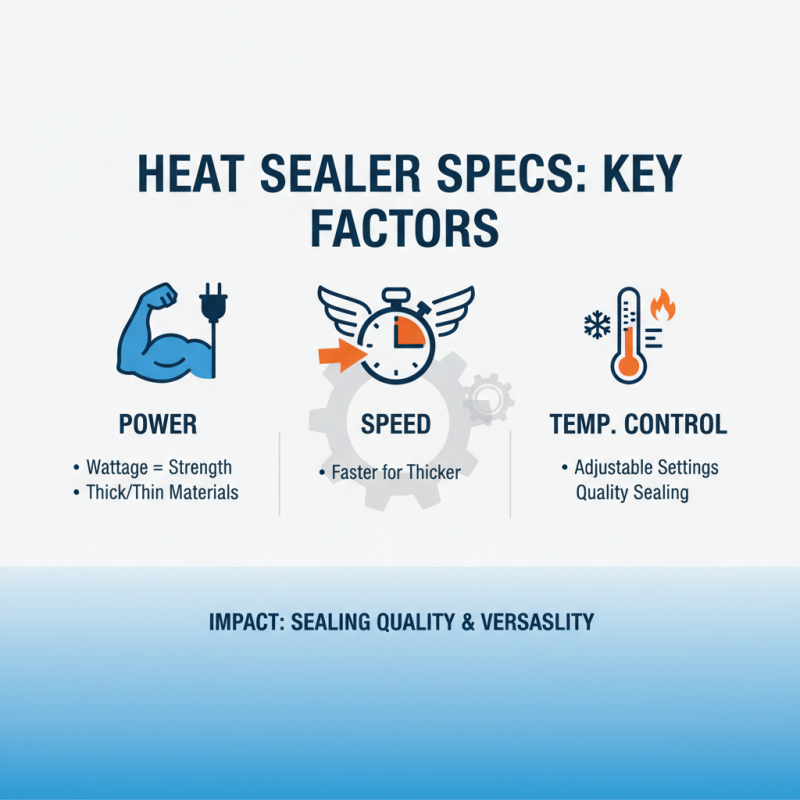
When evaluating heat sealer specifications, focus on power, speed, and temperature control. These factors can significantly impact your sealing quality. A machine with adjustable power settings offers versatility. Higher power can seal thicker materials quickly, while lower settings are ideal for delicate films. Make sure to check the wattage, as it usually indicates the machine's strength.
Speed is another key consideration. Look for machines that provide adjustable sealing speeds. This flexibility allows you to match the sealing process to your production rate. A machine that seals too slowly can create bottlenecks. Conversely, speed that is too fast may lead to improper seals. Finding the right balance is crucial.
Temperature control is vital for achieving strong seals. Machines with precise temperature settings can adapt to various material types. Inconsistent temperature may cause weak seals or damaged products. It's also wise to consider machines with efficient heat recovery systems, which can save energy and maintain performance. Always test the machine's capabilities before making a commitment.
Key Features to Look for in a Heat Sealer for Specific Industries
When selecting a commercial heat sealer machine, industries need to consider specific features that cater to their unique requirements. The material type is crucial; for food packaging, a machine that accommodates multiple films is essential. In contrast, industrial products may require robust sealing that withstands heavy handling. User-friendliness is another important aspect. Controls should be intuitive to ensure that workers can efficiently operate the machine. Complicated interfaces may lead to errors and productivity loss, which can be costly.
Speed and temperature consistency also matter significantly. Faster machines may boost production but could compromise seal integrity. It’s a delicate balance. Additionally, the size of the heat sealer should align with the workspace. A machine that is too large may restrict movement, while one that is too small could limit output. Energy efficiency can be overlooked but is key in reducing operational costs.
Don’t forget about maintenance requirements. Machines that necessitate frequent servicing can disrupt production. Assessing the availability of replacement parts is also critical. Even the most reliable machines need occasional repairs. Overall, take time to reflect on these features before making a decision. Each factor contributes to the overall effectiveness of the sealing process.
Top Tips for Choosing a Commercial Heat Sealer Machine at Canton Fair
| Feature |
Importance |
Recommended Types of Heat Sealers |
Ideal Industries |
| Seal Performance |
High |
Impulse Sealers, Constant Heat Sealers |
Food Packaging, Electronics |
| Temperature Control |
Medium |
Digital Heat Sealers |
Pharmaceutical, Cosmetics |
| Speed of Operation |
High |
Automatic Heat Sealers |
Logistics, Manufacturing |
| Material Compatibility |
High |
Multi-functional Sealers |
Packaging, Textile |
| Energy Efficiency |
Medium |
Energy-efficient Heat Sealers |
Food Production, Green Initiatives |
Safety Standards and Certifications for Commercial Heat Sealers
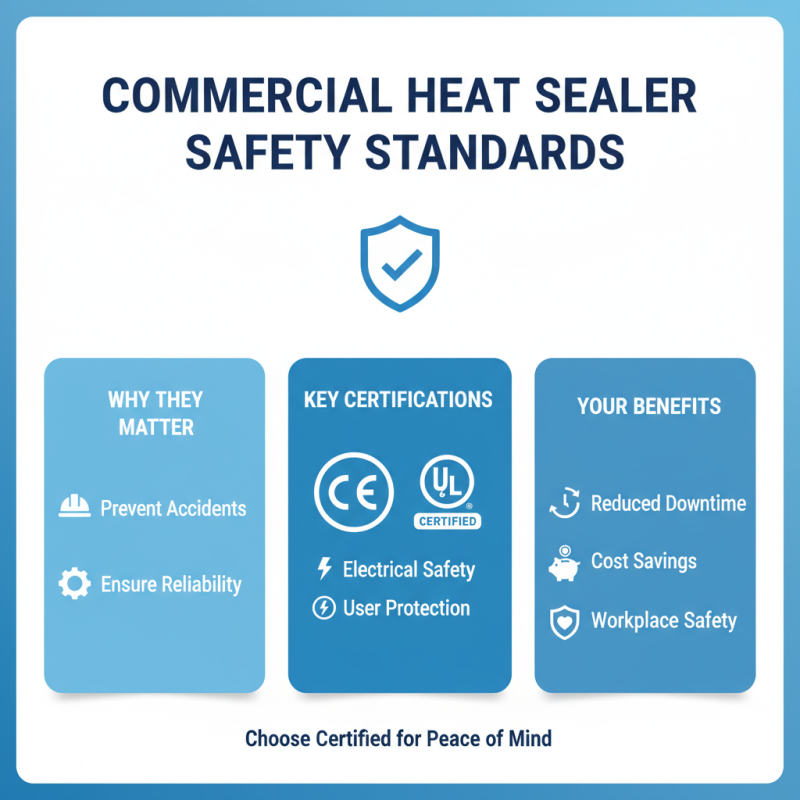
When selecting a commercial heat sealer machine, safety standards are crucial. Compliance with industry regulations can prevent costly accidents. Many sealers should meet specific safety certifications, like CE or UL. These certifications ensure that machines have undergone rigorous testing. This testing often evaluates electrical safety and user protection.
According to a market report by Research and Markets, around 30% of heat sealing machine failures stem from inadequate safety features. Machines lacking on-off switches or emergency stops can pose risks. Inspecting for these features before purchase can help reduce workplace hazards. Always request documentation of safety compliance from manufacturers.
While many buyers focus on price, safety standards can significantly impact long-term costs. Investing in a certified machine may seem pricier upfront. However, this can save you from potential fines or equipment failure. Additionally, user training should stress the importance of adhering to safety norms. Regular training sessions can help keep your team aware and safe. Remember, a few seconds of inattention can lead to severe consequences. Always prioritize safety in your equipment choices.
Budget Considerations: Cost vs. Quality in Heat Sealer Purchases
When considering a commercial heat sealer machine, budget is crucial. The initial cost can be tempting, but focusing solely on price may lead to regrets later.
High-quality machines often have features that cheaper models lack. They may offer better durability, which translates into lower long-term costs.
Investing wisely pays off.
However, it is easy to get overwhelmed by options. For instance, you might find a low-priced machine with excellent reviews. Yet, when comparing specifications, it falls short in practicality.
Some machines overpromise but underdeliver. It's essential to evaluate your specific sealing needs alongside the cost. A balance between cost and quality is vital.
Think about the materials you'll be sealing. Some machines handle thicker materials better than others. Inadequate performance in this area can lead to wasted supplies.
You could save money upfront but end up with rejected packages. Reflect on the long-term benefits of choosing quality.
Investing in a reliable machine can enhance efficiency and effectiveness in your operations.