| Food-Contact Compliance | Paper cup board should be supported by applicable food-contact documentation for the destination market, such as EU Framework Regulation (EC) No. 1935/2004, Commission Regulation (EU) No. 10/2011 where plastic coatings apply, or FDA requirements for the United States. | Declaration of compliance, migration-test reports, coating specification, and updated compliance statements. | Confirms that board and coating materials are suitable for intended food and beverage contact. | 20% |
| Quality Management System | An active ISO 9001-certified quality management system with controlled procedures for incoming materials, production, testing, nonconformities, and corrective actions. | Current certificate, certification scope, audit body, internal inspection records, and corrective-action reports. | Shows whether quality is managed systematically rather than checked only before shipment. | 12% |
| Fiber and Pulp Traceability | The supplier should identify pulp origin, furnish composition, recycled or virgin content, and batch-level traceability. FSC Chain of Custody is advisable when certified sourcing is required. | Chain-of-custody certificate where applicable, pulp supplier records, batch coding, and traceability-test results. | Supports responsible sourcing, consistent board performance, and faster investigation of defects. | 10% |
| Basis Weight Availability | Common paper cup board grades generally fall within approximately 170–400 g/m², depending on cup size, stiffness requirements, coating structure, and converting process. | Technical data sheet, approved basis-weight tolerance, sample sheets, and laboratory measurement records. | Helps match board weight with cup strength, material cost, and forming performance. | 8% |
| Stiffness and Caliper Control | Supplier should control caliper, bending stiffness, moisture, and dimensional stability within agreed specifications and provide test methods used for each property. | Certificate of analysis, test-method references, control charts, and retained-sample results. | Stable stiffness and thickness reduce wall collapse, leakage risk, and problems during die-cutting or forming. | 10% |
| Barrier Coating Capability | Available coating structures should be clearly defined, including polyethylene-coated, water-based coated, or other approved barrier options. Single-side and double-side coating capability should be confirmed separately. | Coating construction, coating-weight specification, pinhole and adhesion test results, and food-contact documentation. | The barrier layer protects against liquid penetration and influences recyclability, sealing, and end-use safety. | 12% |
| Production Capacity | Capacity should be demonstrated by installed machine capability, normal operating output, available shifts, maintenance planning, and confirmed capacity during peak seasons rather than by a headline figure alone. | Equipment list, production records, utilization data, shift schedule, and capacity confirmation for the requested grade and width. | Reduces the risk of missed delivery dates and inconsistent quality during large or urgent orders. | 8% |
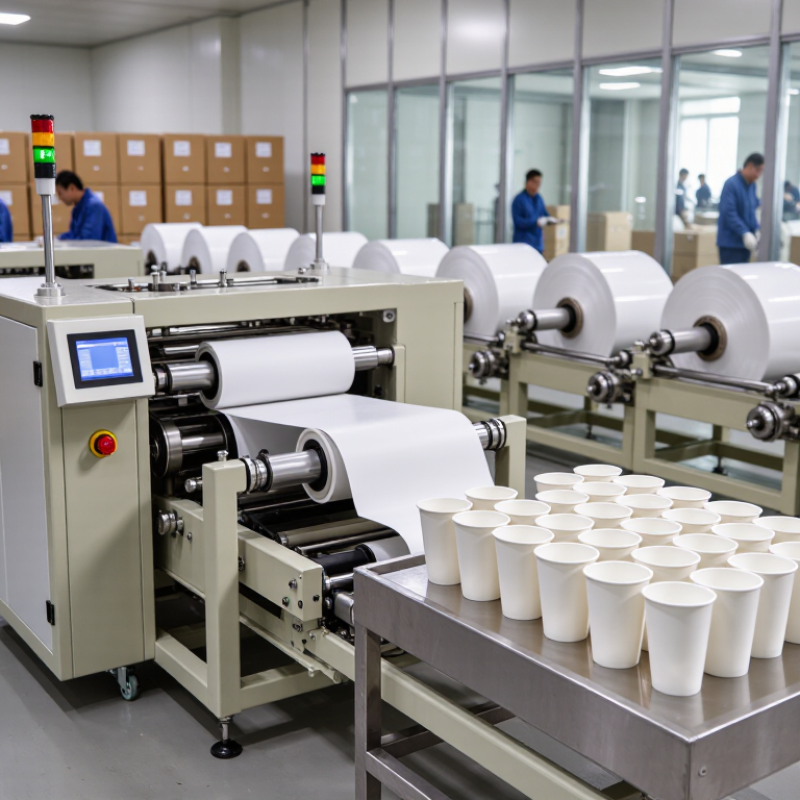
| Slitting and Sheet Conversion | Supplier should offer accurate roll slitting or sheet cutting, controlled edge quality, clean surfaces, and packaging suitable for moisture-sensitive paperboard. | Cut-size tolerances, edge-quality samples, packaging specification, and inspection records. | Consistent dimensions improve printing registration, die-cutting efficiency, and cup-forming yield. | 6% |
| Laboratory and Inspection Controls | A capable supplier should have routine controls for basis weight, moisture, caliper, Cobb water absorption, coating adhesion, surface appearance, and dimensional accuracy. | Laboratory equipment list, calibration records, inspection plan, sampling frequency, and batch release criteria. | Reliable testing identifies variation before board reaches the customer’s printing or cup-forming line. | 8% |
| Lead Time and Delivery Reliability | For established grades, a practical target is approximately 15–30 days after order and artwork or specification approval, subject to quantity, coating type, and shipping plan. | Historical on-time-delivery data, production schedule, export documents, and agreed delivery terms. | Predictable delivery supports inventory planning and prevents production interruptions. | 4% |
| Technical Service and Complaint Handling | Supplier should provide a named technical contact, clear sample-approval procedures, batch investigation, root-cause analysis, and corrective-action response. | Sample approval workflow, complaint-response template, corrective-action examples, and escalation contacts. | Effective communication reduces resolution time when defects occur in printing or cup conversion. | 2% |