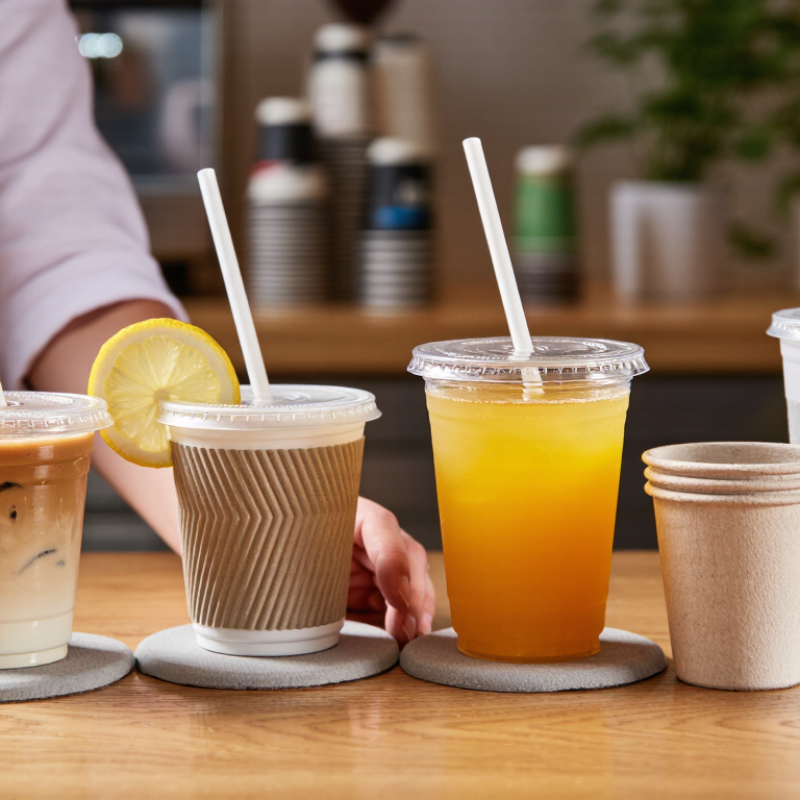
Choosing a cold drink cup involves more than comparing thickness or price. The FDA’s food-contact rules in 21 CFR depend on the cup’s materials and how it will be used. Plastic cups, paperboard cups with polymer linings, and printed or coated surfaces may involve different requirements. Some relevant provisions appear in 21 CFR Parts 175–178, while plastics are addressed in Part 177. The exact rules depend on the material and its intended use.
Check documentation for the finished cup, not just a raw-material description. Ask whether the cup is suitable for the drinks you serve and the expected contact conditions. A cup used for iced water may face different conditions from one holding acidic juice for several hours. Details matter.
FDA compliance is not established by the phrase “food grade” alone, and it does not mean every cup has received FDA approval. Request a supplier’s food-contact compliance statement and confirm it covers the complete cup, including its lining, inks, and coatings where applicable.
I used to think cold drinks made material checks simple. That assumption needs a second look.
Keep the product specifications and intended-use details on file, and revisit them if your drink menu or serving conditions change.