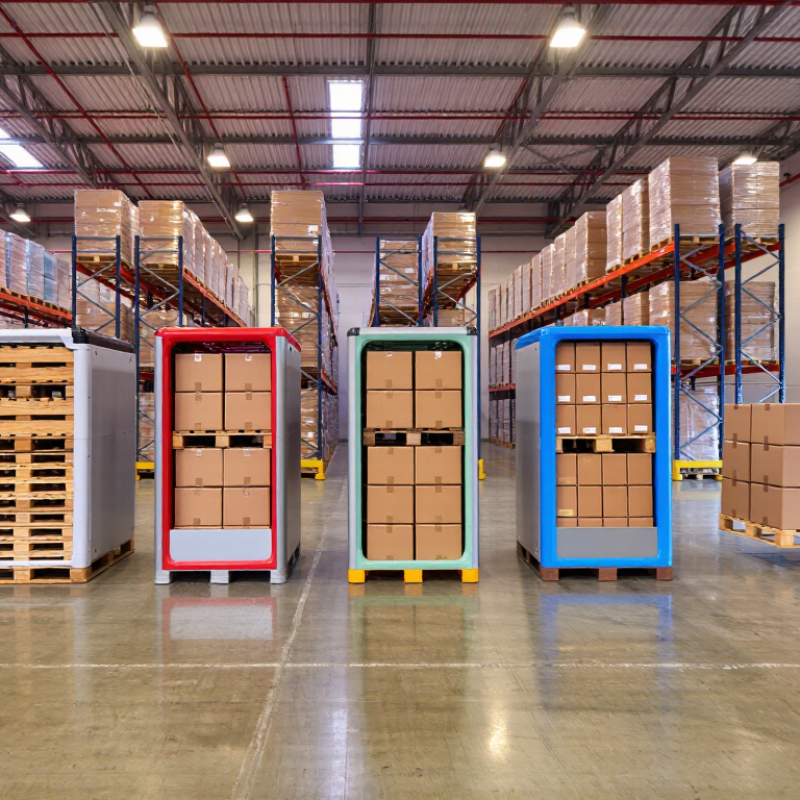
7 Best Sleeve Pallets for Global Shipping?
Choosing a sleeve pallet depends on load capacity, landed cost, and reuse cycles. UNCTAD reports that ships carry over 80% of global merchandise trade by volume. Pallets must survive handling, moisture, and long transit delays. Corrugated paper sleeves are light, recyclable, and usually support 300–600 kilograms. Honeycomb paper systems offer similar handling, but better edge strength. Both often cost about US$8–20 per unit and suit limited reuse. Plywood pallets carry roughly 700–1,200 kilograms, with moderate repairability and costs near US$18–35. Solid-wood pallets remain practical for heavy cargo. They commonly carry 1,000–2,000 kilograms and cost US$20–45, depending on treatment and timber supply.
Molded plastic sleeve pallets provide cleaner surfaces and about 1,000–2,500 kilograms of static capacity. Their typical cost is US$35–90, but they may complete 20 or more trips. Steel pallets handle approximately 2,000–5,000 kilograms and resist impact, although costs can exceed US$100. Aluminum versions weigh less than steel and resist corrosion, but often cost US$150–300. RPA guidance commonly treats reusable packaging as a multi-trip system, with ten trips frequently used as a practical benchmark. That benchmark is useful, not universal.
Eurostat reported 188.7 kilograms of packaging waste per European resident in 2021. Reuse deserves serious attention. My field preference is plastic for stable return lanes, wood for irregular exports, and paper for one-way shipments. This ranking is imperfect. Empty-return distance, repair rates, and warehouse humidity can reverse it. ISO 6780 dimensions, especially 1,200 × 1,000 millimeters, still need checking against container floors and forklifts.