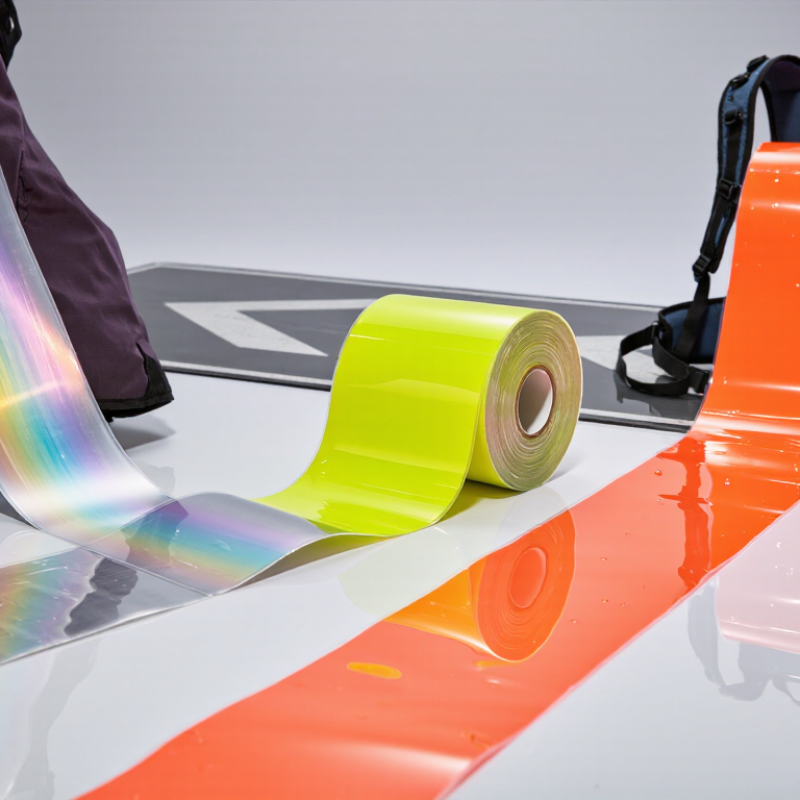
| Glass-Bead Retroreflective Strip | Uses tiny glass beads to return incident light toward its source. | Provides strong nighttime visibility when illuminated by headlights or a flashlight; performance is generally lower than microprismatic material at wider observation angles. | Workwear, uniforms, bags, backpacks, low-speed equipment, and general pedestrian visibility products. | Flexible, lightweight, widely available, and suitable for sewn or heat-applied designs. | Dirt, abrasion, repeated washing, and surface curvature can reduce performance; verify the product’s care instructions and intended use. |
| Microprismatic Retroreflective Strip | Uses arrays of microscopic prisms to reflect light efficiently back toward the light source. | Typically offers high nighttime brightness and effective visibility over a broader range of viewing angles than basic glass-bead materials. | High-visibility garments, traffic-control apparel, roadside workwear, vehicle markings, trailers, and emergency equipment. | Excellent conspicuity, strong long-distance recognition, and good suitability for demanding outdoor applications. | May be less soft or flexible than textile-based glass-bead tape; installation must follow the specified adhesive, heat, or sewing method. |
| Fluorescent Reflective Strip | Combines a fluorescent daylight-visible color with a retroreflective surface for low-light visibility. | Improves daytime conspicuity in overcast conditions and provides nighttime visibility when illuminated. | Road and construction workwear, school-crossing garments, cycling clothing, pedestrian safety apparel, and outdoor uniforms. | Supports both daytime and nighttime detection; bright fluorescent colors help distinguish the wearer from the background. | Fluorescent color can fade with ultraviolet exposure and washing; it is not a substitute for retroreflective performance at night. |
| Sew-On Reflective Textile Tape | A textile carrier holds reflective elements and is attached with stitching. | Provides consistent visibility on flexible garments while allowing repeated movement and laundering when properly constructed. | Jackets, trousers, uniforms, sportswear, safety vests, gloves, and washable fabric accessories. | Good flexibility, reliable mechanical attachment, and suitability for garments that require frequent washing. | Stitching quality, seam placement, laundering temperature, and the tape’s certified performance all affect service life. |
| Heat-Transfer Reflective Film | A pressure-sensitive or heat-activated adhesive bonds a thin reflective layer to fabric. | Can create bright, precise shapes, lettering, and segmented patterns that are visible under direct light. | Athletic clothing, cycling apparel, branded-free uniforms, decorative safety graphics, and fitted work garments. | Clean appearance, flexible design options, and no raised sewn edge when correctly applied. | Application temperature, pressure, dwell time, fabric compatibility, and washing instructions must be controlled carefully. |
| Vehicle-Grade Reflective Strip | Uses durable retroreflective sheeting designed to remain visible on rigid or semi-rigid surfaces. | Delivers high nighttime conspicuity for vehicles, trailers, barriers, and equipment exposed to headlights. | Trucks, trailers, utility vehicles, bicycles, road barriers, loading areas, and mobile equipment. | Durable outdoor construction, strong contrast, and suitability for marking vehicle edges and outlines. | Surface preparation is critical; legal requirements for color, placement, width, and approved performance vary by region and vehicle type. |
| Temporary Adhesive Reflective Strip | Uses a removable or short-term adhesive layer to attach reflective material without permanent installation. | Provides short-term nighttime marking when the surface is clean, dry, and within the adhesive’s operating range. | Temporary work zones, event equipment, rental items, short-term hazard marking, and test installations. | Fast installation, easy removal, and minimal tools or surface alteration. | Generally less resistant to moisture, abrasion, heat, and prolonged outdoor exposure than permanent systems. |
| Photoluminescent Strip | Absorbs ambient light and releases it gradually in darkness; it does not depend on headlights for visibility. | Useful in dark areas after sufficient charging light, but brightness decreases over time and is different from retroreflection. | Indoor egress routes, stair edges, corridors, equipment locations, and areas where backup visual guidance is needed. | Can remain visible during power interruptions and requires no electrical wiring or battery. | Should not be treated as a replacement for required emergency lighting or retroreflective markings; performance depends on charging light, cleanliness, and product specifications. |