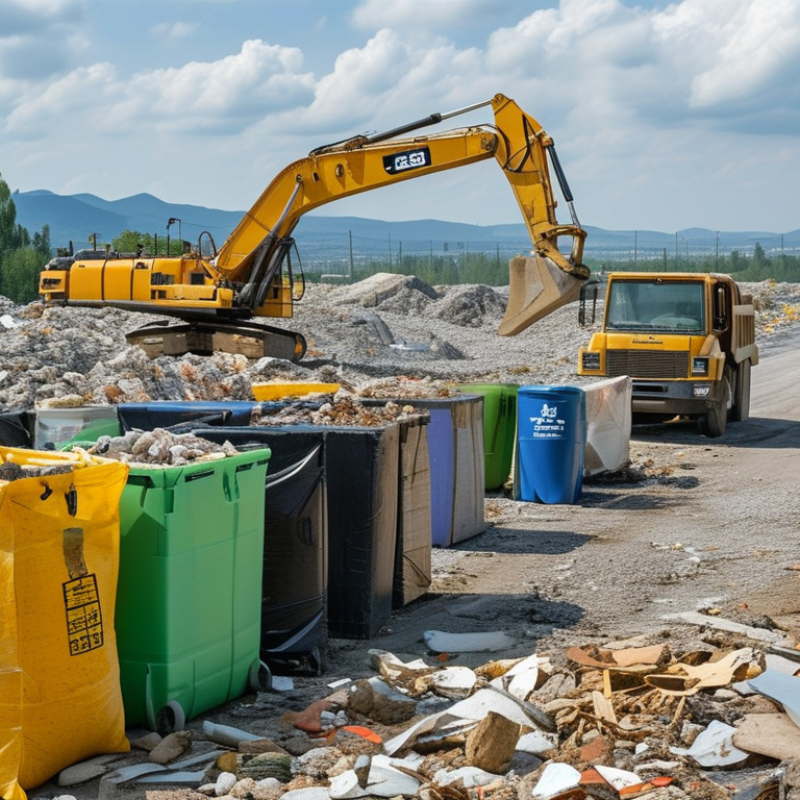
Choosing the right debris bag starts with film thickness, not appearance. The U.S. Environmental Protection Agency reported about 600.9 million tons of construction and demolition debris in 2018. That volume shows why small material choices matter on active sites.
A 3 mil bag suits light drywall dust, packaging, and small wood pieces. It is easier to carry and usually costs less. However, sharp edges can puncture it quickly.
Mixed construction waste needs more protection. A 4 or 5 mil bag offers a better balance for broken tile, plaster, insulation, and short metal scraps. For concrete fragments, nails, or dense flooring, a 6 mil bag is safer. Still, thicker does not mean indestructible. A 6 mil bag can fail at one sharp corner. The U.S. Department of Transportation’s Federal Highway Administration identifies weight, size, and handling as important factors in construction debris management, not thickness alone.
Check the bag’s capacity before filling it. Overloading creates stress at the seams and makes lifting hazardous. I would not rely on film thickness as the only quality signal. Resin blend, seam construction, puncture resistance, and temperature also affect performance. ASTM D1709 puncture testing can provide useful technical comparison, but test results may not mirror a crowded jobsite.
In practice, use 3 mil for light waste, 4–5 mil for mixed debris, and 6 mil for sharp, heavy loads. Leave space at the top. That small detail is often overlooked.